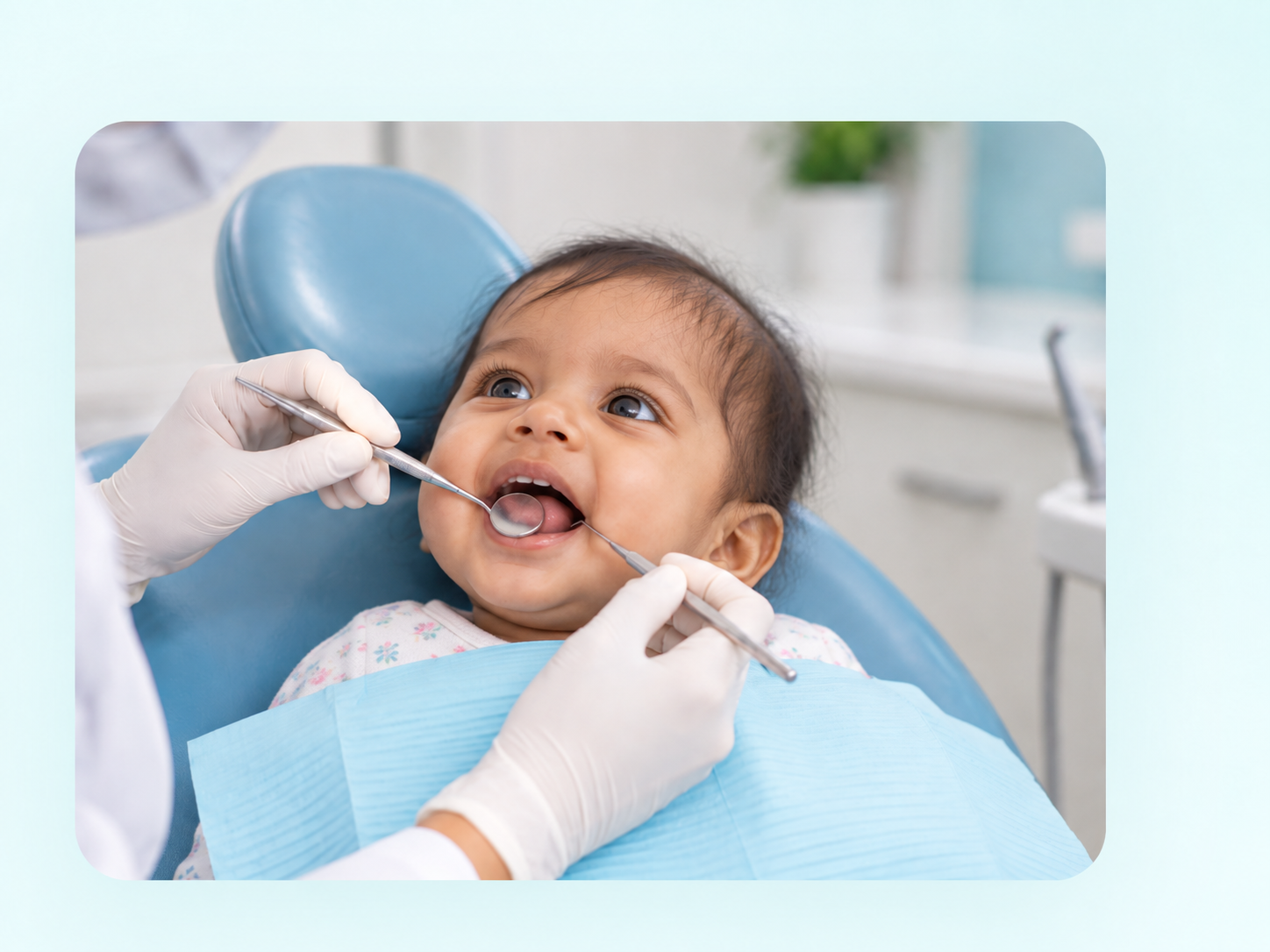
🔍 The Pre-Trip Dental Audit
The single biggest mistake NRI families make is arriving in India and walking into a dental clinic with no prior information. This turns a potentially efficient 10–14 day treatment window into a scramble of X-rays, waiting for lab results, and trying to fit too many appointments into too little time.
A proper pre-trip dental audit done 4–8 weeks before travel transforms the experience. It means your Indian dentist can review records in advance, prepare a treatment plan, and have your first appointment be substantive rather than purely diagnostic.
Here's how to do it systematically. Start with an honest assessment of your family's dental needs. For each family member, ask: When was the last dental check-up? Are there any known problems (sensitivity, pain, visible decay, gaps, crowding)? Have any treatments been recommended but not yet done? Is there any orthodontic concern for the children?
Write this down. Share it with your India clinic during the pre-arrival consultation. This alone saves significant time on arrival.
📁 Records to Gather Before You Leave
Your home-country dentist holds records that your Indian dentist needs. Request these at least 4 weeks before travel to allow time for the clinic to process your request.
For all family members:
- Most recent set of X-rays ask for digital files (DICOM or JPEG format). These can be emailed directly to the India clinic.
- Treatment history summary what work has been done, when, and on which teeth.
- Existing dental restorations list of fillings, crowns, root canals already completed.
- Current medications especially relevant for sedation consideration or antibiotic selection.
- Allergy history particularly latex, local anaesthetics, penicillin.
For children specifically:
- Orthodontic records if orthodontic work has been started or assessed, bring the original records, study models or their digital equivalent, and any treatment plans discussed.
- Growth charts/cephalometric X-rays relevant for children who have had orthodontic assessments.
- Paediatric dental notes including any behavioural notes about dental anxiety or previous sedation use.
- Immunisation record useful if sedation is being considered, as some protocols require general health verification.
Ask your home dentist to export X-rays in JPEG or DICOM format and email them to your India clinic directly. Most modern clinics can receive and review these within 24–48 hours. This is the single most impactful thing you can do before travelling.
📹 The Pre-Arrival Video Consultation: Why It Matters
A 20–30 minute video consultation with your India clinic conducted 2–4 weeks before travel is now standard practice at quality NRI-focused practices. It is not just a courtesy call. It is a clinical interaction that changes how your treatment unfolds.
During a pre-arrival video consultation, the dentist will:
- Review the X-rays and records you have shared
- Discuss concerns you've raised and observations from records
- Prepare a provisional treatment plan with cost estimates
- Identify which treatments are feasible within your time window
- Prioritise treatment sequence to maximise what can be completed
- Flag any concerns that require additional diagnostics on arrival
- Answer your questions about procedures, sedation, and logistics
After the video consultation, you should receive a written summary of the proposed treatment plan with estimated costs. This allows you to make informed decisions before you arrive not during a clinical appointment when the pressure is higher and time is limited.
⏱ How Much Time to Allocate Per Treatment Type
This is where most families under-plan. Use these timelines as your guide when working out how many dental appointments to schedule and when:
over 2 weeks
over 3 weeks
over 3–4 weeks
Families arrive planning to "do everything" in 8 days. In reality, 8 days allows for about 6–8 appointments across a family of four. Be selective. Prioritise pain-causing problems, then visible concerns, then cosmetic work. Your India dentist will help you sequence this during the pre-arrival consultation.
💬 What to Tell Your Home-Country Dentist
Many NRI families are reluctant to tell their UK or Australian dentist that they're planning dental work in India, fearing judgment. Most modern dentists understand the economics and are professionally obliged to cooperate with records transfers. Be direct:
- "I'm visiting India for three weeks and would like to have some dental work done there. Can you provide my dental records and X-rays in digital format?"
- Ask specifically for X-rays in DICOM format if possible, or JPEG if DICOM is not available.
- Request a written treatment summary what has been done and what has been recommended.
- If the dentist has concerns about ongoing treatment (such as active orthodontics), discuss how to coordinate with the India clinic.
A good home-country dentist will also welcome receiving records from your India visit after you return. This continuity of care benefits you enormously your home dentist can monitor and maintain work done in India rather than having to re-diagnose everything from scratch.
❓ Questions to Ask the India Clinic Before You Arrive
A reputable clinic will welcome these questions and answer them clearly. If a clinic is evasive or gives vague answers, that's a signal to look elsewhere.
- "Can we have a video consultation before I arrive?" quality NRI clinics will say yes without hesitation.
- "What qualifications does the treating dentist hold?" verify MDS (Master of Dental Surgery) for specialist work, BDS for general care.
- "What X-ray and imaging technology do you use?" digital X-rays and cone beam CT scanning (for implants/complex cases) are the standard.
- "Can you provide a written treatment plan with costs before I arrive?" the answer should be yes.
- "Do you have experience treating NRI patients?" ask specifically about managing cross-country continuity of care.
- "What materials do you use for crowns, aligners, implants?" specific brands or ISO-certified equivalents should be named.
- "Can you email records to my home dentist after treatment?" any modern clinic should offer this.
✅ The Day-of-Arrival Checklist
You've done the preparation. Now here's what to do on arrival:
- Book your first appointment for Day 2 or Day 3 allow one day for jet lag recovery, especially for children.
- Bring all physical records any printed records, previous X-ray films, or documents not sent digitally.
- Bring a list of current medications for all family members including dosages and schedules.
- Bring your insurance documents some dental procedures can be claimed on travel or health insurance; ask your clinic for coded receipts.
- Brief children beforehand explain the clinic is friendly, what will happen, and that they'll be safe and comfortable. Children who arrive prepared cooperate better.
- Have your WhatsApp number active many Indian clinics communicate appointment reminders, pre-care instructions, and reports via WhatsApp for NRI convenience.
Book a pre-arrival video consultation with Dr. Sugandh Mittal share your records and we'll prepare a complete treatment plan before you land. WhatsApp or call +91 99452 25971, or book online here.