Pit & Fissure Sealants — Blocking 80% of Childhood Cavities Before They Start
The deep grooves on the biting surfaces of back teeth are where 80% of childhood cavities begin. Dental sealants seal those grooves permanently — painless, fast, and lasting 5–10 years. Best applied the moment first permanent molars erupt at age 5–7.
Why Back Teeth Are So Vulnerable
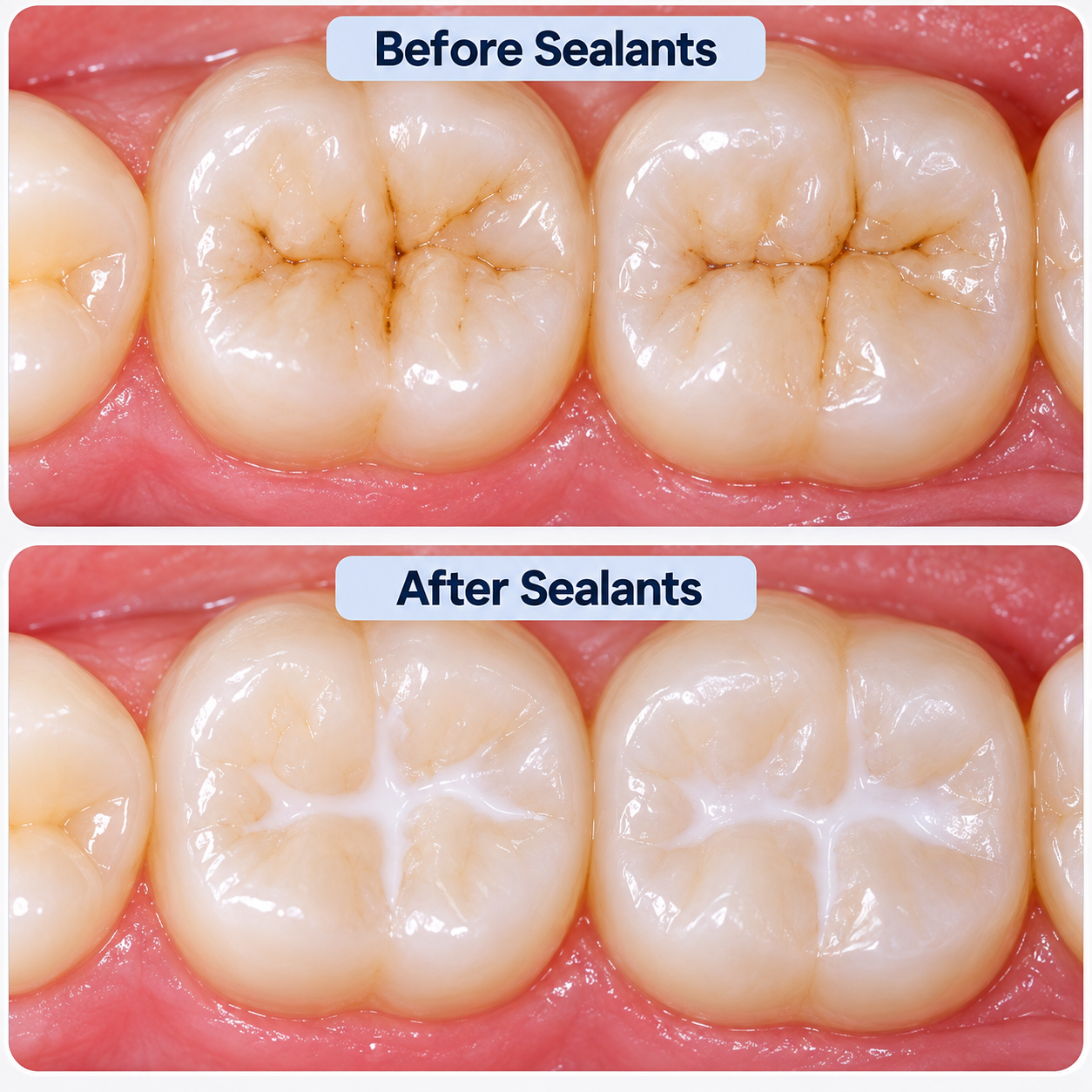
The chewing surfaces of molars and premolars are not flat — they are covered with deep pits and narrow fissures. In some children these grooves are less than 0.1 mm wide — narrower than a single toothbrush bristle. Food particles and bacteria settle into them and cannot be reached by brushing, no matter how carefully a child cleans their teeth.
Bacteria in these grooves produce acid continuously, dissolving enamel from within. Studies consistently show that 80% of all cavities in children and teenagers originate on these biting surfaces. Sealants eliminate the problem at its source.
What Sealants Do
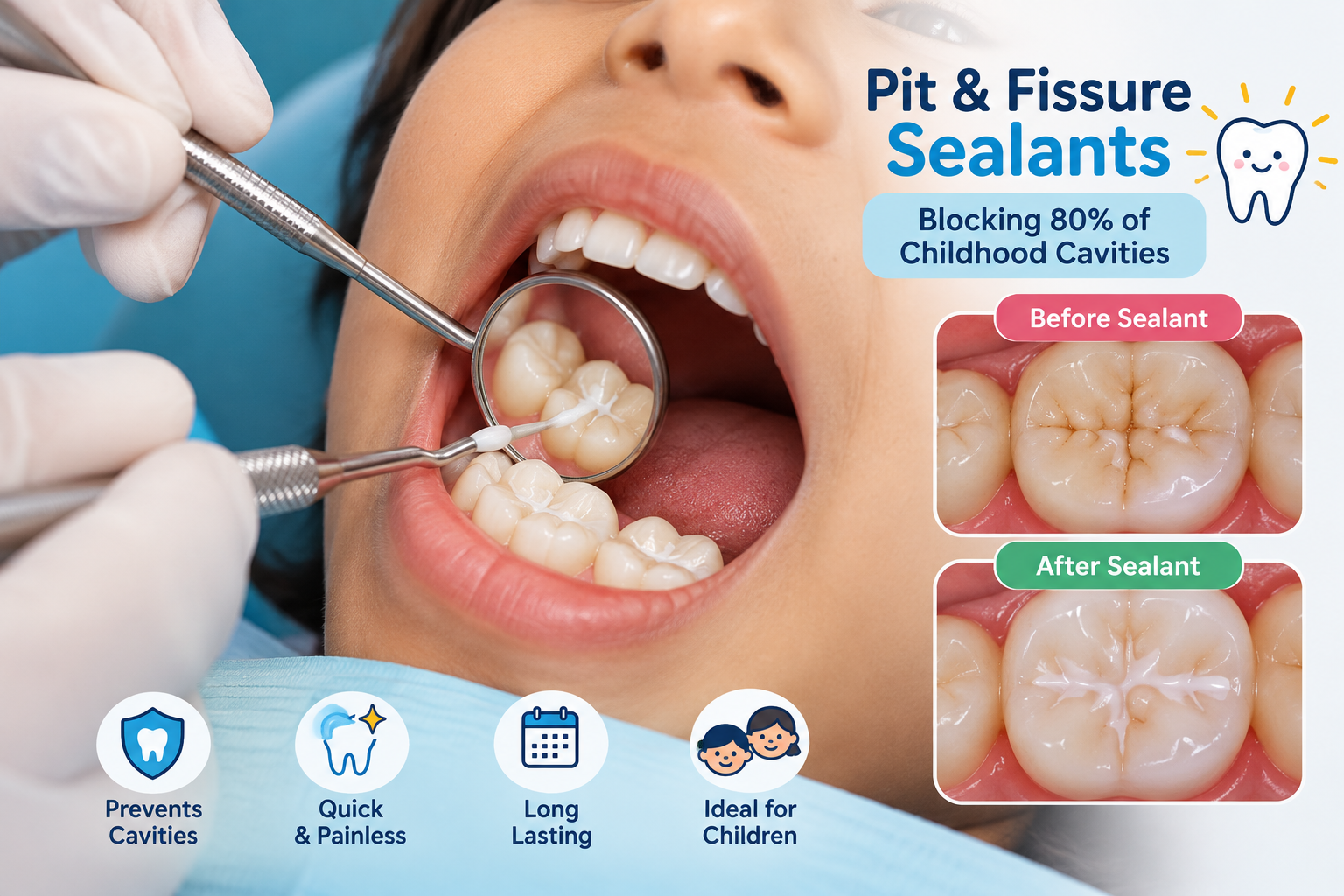
A pit and fissure sealant is a thin, flowable resin that is painted into the grooves of the tooth and hardened with a blue-light curing lamp. Once set, it forms a smooth, hard surface over the pits and fissures. Bacteria can no longer accumulate in them, and acid production stops. The tooth surface is physically sealed against decay for years.
The Procedure
- No injections, no drilling, no discomfort.
- The tooth is cleaned thoroughly with a polishing paste.
- A mild acid gel is applied to the grooves for 15 seconds to micro-roughen the surface for bonding.
- The tooth is rinsed and dried.
- The sealant resin is painted into each groove.
- A blue curing light sets the sealant hard in approximately 5 seconds per tooth.
- Total time: 5–8 minutes per tooth.
When to Apply
Timing is critical — sealants are most effective when applied as soon as the tooth has fully erupted, before any decay can begin.
- First permanent molars — erupt around age 5–7. These are the most important teeth to seal and are often missed because parents assume they are baby teeth.
- Second permanent molars — erupt around age 11–13. Both sets should be sealed as soon as they are fully through.
- Premolars and any baby molar with deep grooves may also be recommended for sealants depending on individual anatomy.
How Long Do They Last
With normal biting forces, sealants last 5–10 years. They are checked at every preventive visit and topped up or replaced if any wear is detected. A sealant that has worn slightly but not completely broken down still provides significant protection — even a partial seal dramatically reduces bacterial access to the groove.
What Parents Say
“My son had very deep grooves in his back teeth. Sealants at age 6 protected them through his most cavity-prone years. No fillings at 10 — we are absolutely thrilled with the preventive result.”
“The procedure was over so fast my daughter didn’t know it had happened. Paint on, cure light for a second, done. She was more interested in choosing her toothbrush reward afterwards.”
“We had questions about the BPA issue — the team printed out the safety data and explained everything patiently. Very reassuring. Sealants have been one of the best preventive decisions we’ve made.”
Frequently Asked Questions
Occasionally, yes. While sealants are most commonly applied to permanent molars, some baby molars have particularly deep fissures and are at high risk of decay in young children. Dr. Mittal assesses each tooth individually and will recommend sealants for baby teeth when the anatomy and decay risk justify it — particularly for children who are cooperative enough for the procedure.
The sealants used at Dr. Mittal's are from leading dental manufacturers and are certified safe. While some older sealant materials contained trace BPA precursors, modern formulations used in specialist paediatric practices contain no detectable BPA. The amount of any substance released during setting is clinically negligible — less than what a child is exposed to from touching a receipt or touching many plastic surfaces. Multiple systematic reviews confirm the safety profile of contemporary dental sealants.
First permanent molars erupt at around age 6 and are the highest-priority teeth for sealants. The ideal window is within the first two years of eruption, when the enamel surface is still maturing. Second permanent molars erupt around age 12 and benefit from sealants at that stage. Baby molars with very deep fissures in high-risk children are also sealed. Our team identifies candidates at every routine preventive check-up.
Sealants last 3 to 7 years on average when placed correctly. We check sealant integrity at every routine visit — a partially retained sealant is repaired or reapplied. An area where the sealant has worn away without being replaced is at higher risk than a tooth that was never sealed, because the exposed fissure may have been roughened during placement. Regular check-ups are therefore essential after sealant placement.
No. Sealants protect the pits and fissures on the biting surface — the most common site for cavities in back teeth — but not the smooth sides of teeth or the areas between teeth. Brushing, flossing, diet, and fluoride remain essential. Sealants work as part of a complete preventive programme, not as a substitute for it.
No injections, no drilling, and no discomfort. The tooth is cleaned, the surface conditioned briefly with a mild acid gel, rinsed, dried, and the sealant liquid is painted on and set with a curing light. The whole process takes about five minutes per tooth. Most children, including anxious ones, tolerate sealant placement easily.
Related Pages
Ready to book? Our specialist will answer all your questions at the consultation.
WhatsApp us to book — we respond within the hour.