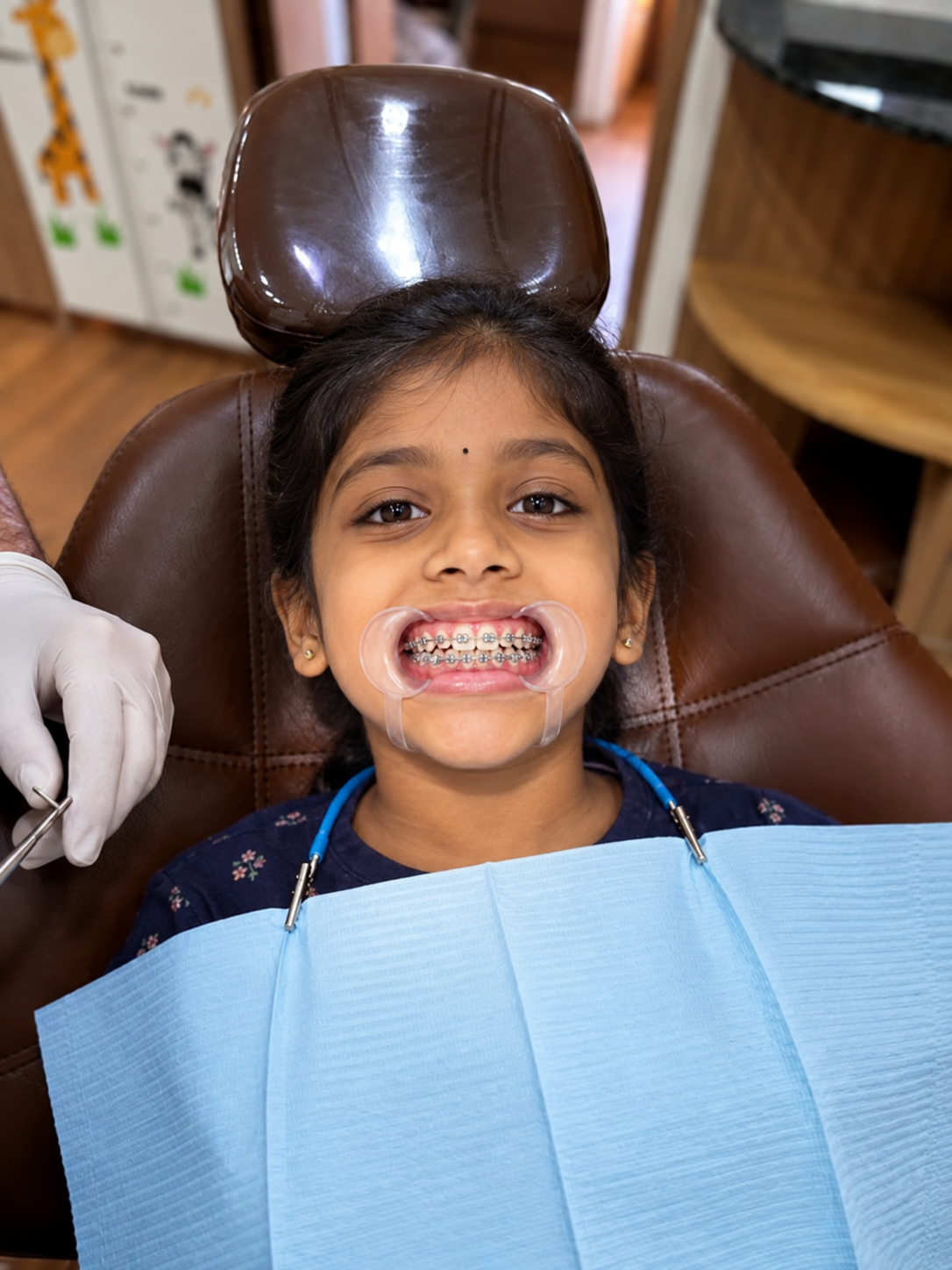
Orthodontic problems are easier to correct when caught early. Dr. Mittal identifies developing issues from age 6 to 7 — before they become structural — and plans treatment that works with the child's natural growth rather than against it.
When to Begin Treatment
Phase 1: Early Intervention (Ages 7–10)
Phase 1 treatment uses removable or fixed appliances to guide jaw growth and create space while the child is still developing. Not every child needs Phase 1 — but for those who do, early action prevents more invasive treatment later.
- Crossbites — fixed when the bite pattern is narrow; left untreated, they cause asymmetric jaw growth.
- Severe crowding — space is created for permanent teeth before they erupt, reducing the chance of extractions.
- Skeletal discrepancies — upper or lower jaw position issues are most responsive to growth modification at this stage.
- Thumb or finger habits — if habits have caused bite deformation, habit appliances correct the bone changes.
Phase 2: Full Orthodontic Treatment (Ages 12–14)
Once all permanent teeth are in, comprehensive braces or aligner treatment aligns all teeth, fine-tunes the bite, and achieves the final result. Phase 2 follows Phase 1 if one was done, or begins at this stage if early intervention was not needed.
The American Association of Orthodontists recommends an orthodontic screening by age 7. At this age, the first permanent molars and incisors have arrived — enough to assess jaw width, bite, and emerging crowding. Catching problems at 7 does not mean treatment begins at 7; it means we have a plan before the window closes.
Types of Braces
Metal Braces
The most effective and durable option. Modern metal brackets are smaller, lower-profile, and less noticeable than older designs. For children and adolescents with complex bite issues, metal braces deliver the most precise control. Coloured elastics are popular with younger patients.
Ceramic (Tooth-Coloured) Braces
Ceramic brackets match the tooth colour, making them less visible. They are a good choice for adolescents who want a more discreet option but still need the reliability of fixed braces. They require slightly more careful hygiene as the brackets can stain with certain foods.
Clear Aligners for Teens
A series of clear, removable trays that progressively move teeth. Best suited for moderate crowding and spacing without complex bite issues. Requires strong compliance — the trays must be worn 20 to 22 hours daily to work. We assess readiness carefully before recommending aligners for adolescents.
Retainers
Why Retainers Are Non-Negotiable
Teeth have a natural tendency to shift after braces are removed. This is biology, not failure. Retainers hold the corrected position while the bone and fibres stabilise. Skipping or inconsistent retainer wear is the most common reason orthodontic results are lost.
Types of Retainers
- Fixed (bonded) retainer — a thin wire bonded behind the front teeth; requires no patient action and works continuously. Recommended for cases with a high relapse risk.
- Removable Hawley retainer — durable acrylic and wire plate worn at night; can be adjusted if minor shifts occur.
- Clear removable retainer — similar material to aligners; worn at night; must be replaced when worn out or damaged.
Frequently Asked Questions
Related treatments: