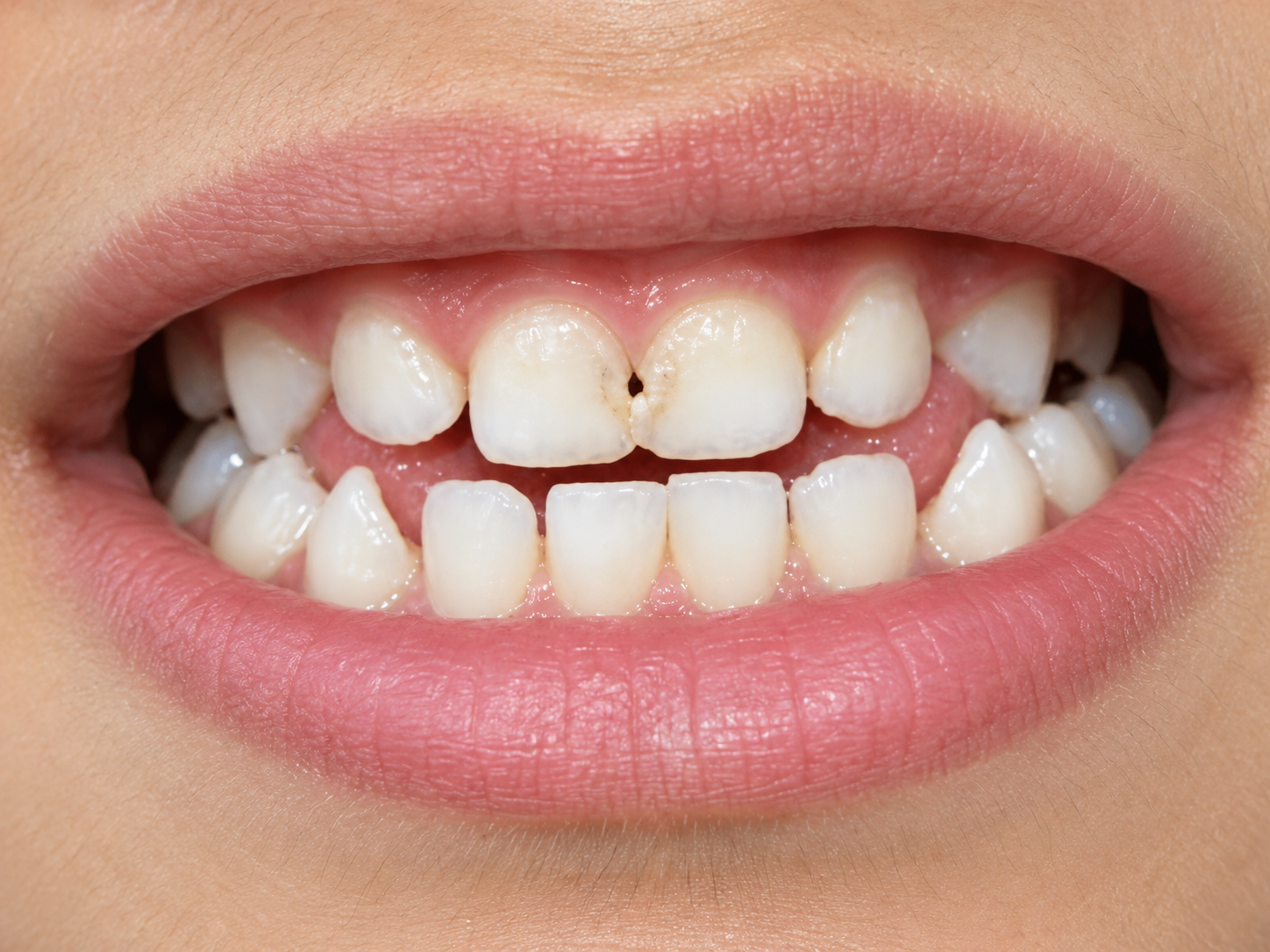
What Is Silver Diamine Fluoride?
Silver Diamine Fluoride (SDF) is a colourless liquid containing silver, fluoride, and ammonia. When applied to a decayed tooth surface, it works in two ways simultaneously: the silver ions kill the bacteria causing decay, and the fluoride hardens the remaining tooth structure and promotes remineralisation.
SDF has been used in Japan and Brazil for decades and was cleared by the US FDA in 2014. It is now recognised by the Indian Dental Association as a safe and effective cavity-arresting agent for children.
How It Works
The cavity-arresting mechanism of SDF is well understood:
- Silver kills bacteria — silver ions penetrate the decayed dentin and disrupt bacterial cell membranes, stopping the progression of decay within days.
- Fluoride hardens enamel — fluoride converts the softened dentin into a harder, acid-resistant mineral (fluorapatite), physically blocking further bacterial invasion.
- Creates a barrier — the treated surface becomes dark (dark brown to black) as the silver reacts with organic tissue, and this hard dark layer seals the cavity.
The entire application takes under one minute per tooth and requires no drilling, no anaesthetic, and no specialist equipment beyond a small applicator brush.
Who Benefits Most from SDF
- Toddlers and young children — unable to tolerate conventional drilling, especially for cavities that are small and not causing pain.
- Anxious or uncooperative children — SDF arrests decay non-invasively while the child matures enough for conventional treatment.
- Baby teeth close to natural shedding — a tooth due to fall out in 12–18 months does not always warrant drilling; SDF arrests the decay until natural exfoliation.
- Multiple active cavities — SDF can be applied to all affected teeth in a single visit, arresting decay site-wide before prioritised restorative treatment.
- Special needs children — where cooperation for conventional treatment is limited, SDF can manage decay without sedation.
The Dark Stain — What Parents Need to Know
The most significant side effect of SDF is cosmetic: treated cavity surfaces turn dark brown to black as the silver reacts with organic tissue. This is permanent and cannot be bleached away.
Healthy tooth structure adjacent to the cavity is not stained. Gums and skin may turn temporarily brown if SDF contacts them — this fades within a few days.
For back teeth this discolouration is rarely visible during normal activity. For front teeth, families need to weigh the cosmetic concern against the benefit of non-invasive decay arrest. Dr. Mittal discusses this openly at every consultation and helps families make an informed choice.
Frequently Asked Questions
SDF arrests active decay — it stops bacteria from progressing further. It does not restore the lost tooth structure. A tooth treated with SDF will have a hardened, non-progressive dark surface. When the child is older and more cooperative, or when the cavity is on a permanent tooth, conventional restorative treatment (filling) is still needed to restore shape and function. SDF is a powerful interim management tool, not a permanent filling.
Yes. SDF is applied topically in very small quantities. The amount absorbed systemically from a single application is well below any level of concern. It is safe for children from toddler age onwards. The only absolute contraindications are a known silver allergy (rare) or oral ulcers/open wounds at the application site, as the ammonia component can cause brief discomfort. Dr. Mittal screens for these before every application.