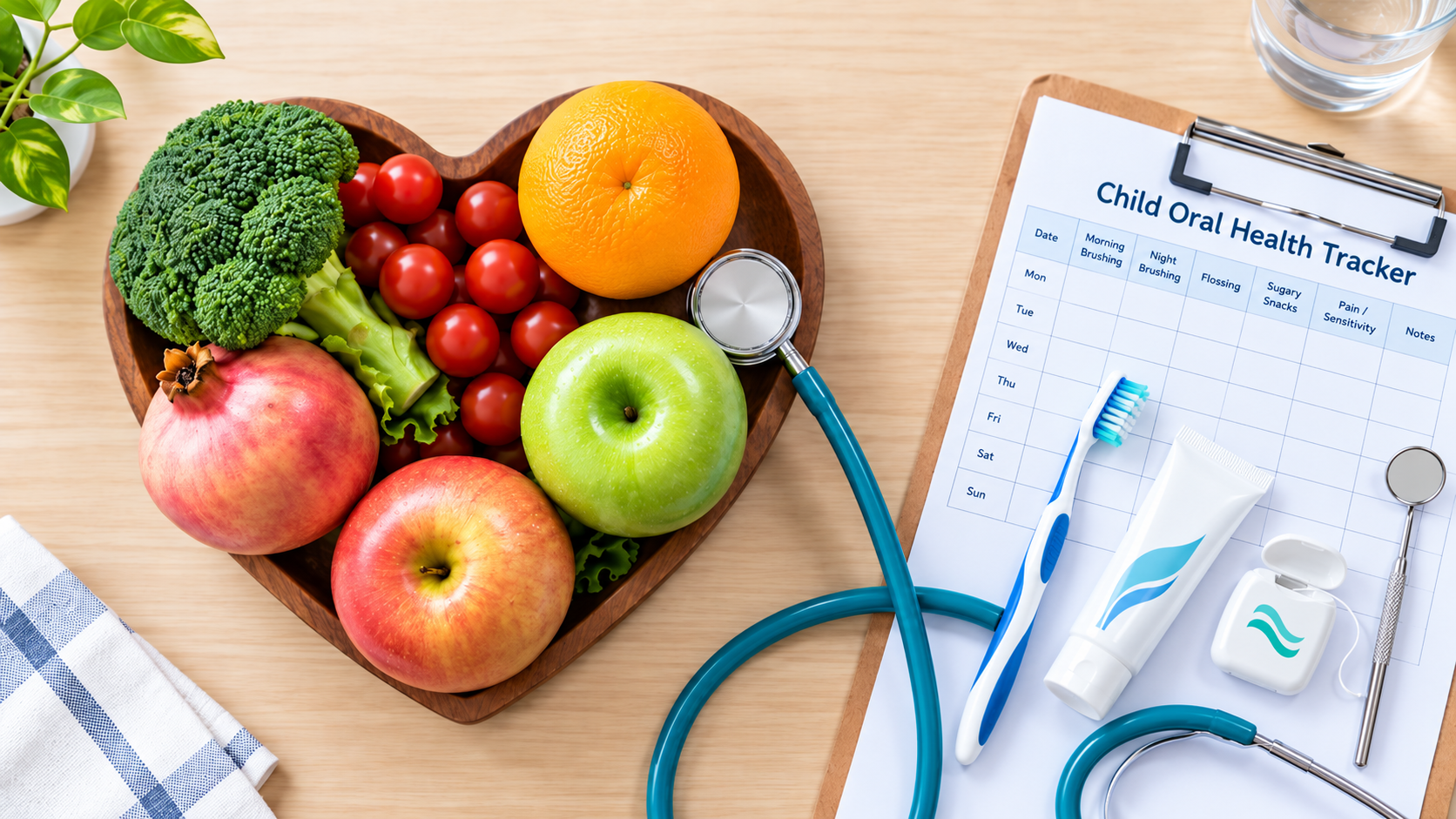
How Diet Affects Your Child's Teeth
Tooth decay is not caused by sugar alone — it is caused by the combination of bacteria, fermentable carbohydrates, and time. Every time a child eats or drinks anything other than water, the bacteria in the mouth produce acid for up to 20 minutes. Frequent snacking means the teeth are bathed in acid almost continuously, giving enamel no time to recover.
Diet counselling at Dr. Mittal's goes beyond a list of "foods to avoid." We map the actual patterns of a child's eating and drinking day, identify the hidden sources of sugar and acid, and suggest practical substitutions that fit the family's lifestyle.
Sugar Mapping — What We Assess
- Frequency vs quantity — sipping a sugary drink slowly over 2 hours is far more damaging than drinking the same amount in 5 minutes at mealtimes.
- Hidden sugars — biscuits, packaged snacks, flavoured yoghurt, "health" drinks, and fruit juices are common hidden sources of fermentable carbohydrate.
- Acid erosion foods — citrus fruits, pickles, sports drinks, and carbonated drinks (including flavoured water) cause erosion even without bacteria.
- Protective foods — cheese, plain yoghurt, nuts, and vegetables that stimulate saliva and neutralise acid naturally.
Practical Guidance We Provide
- Simple substitutions for common snacks that reduce cavity risk without removing enjoyment
- Safe snacking patterns — when and how often to eat to minimise acid attack time
- Drink guidance — the role of water, milk, and what to avoid between meals
- Age-specific advice — diet for infants (bottle caries prevention), toddlers, school-age children, and teens
Frequently Asked Questions
Whole fruit is generally not a dental concern when eaten at mealtimes. The fibre content slows sugar release, and the act of chewing stimulates saliva that neutralises acid. Fresh fruit juice is different — the fibre is removed, and the sugar and acid are more concentrated and rapidly available. We recommend whole fruit at mealtimes and water between meals, with juice limited to mealtimes in a cup rather than a bottle or sippy cup.
Diet counselling is most valuable before problems start — ideally at the first dental visit (6–12 months) and at weaning. Early childhood caries (baby bottle tooth decay) is entirely preventable with the right feeding practices. For older children who already have cavities, dietary assessment is a critical part of understanding why decay occurred and preventing it from happening again.