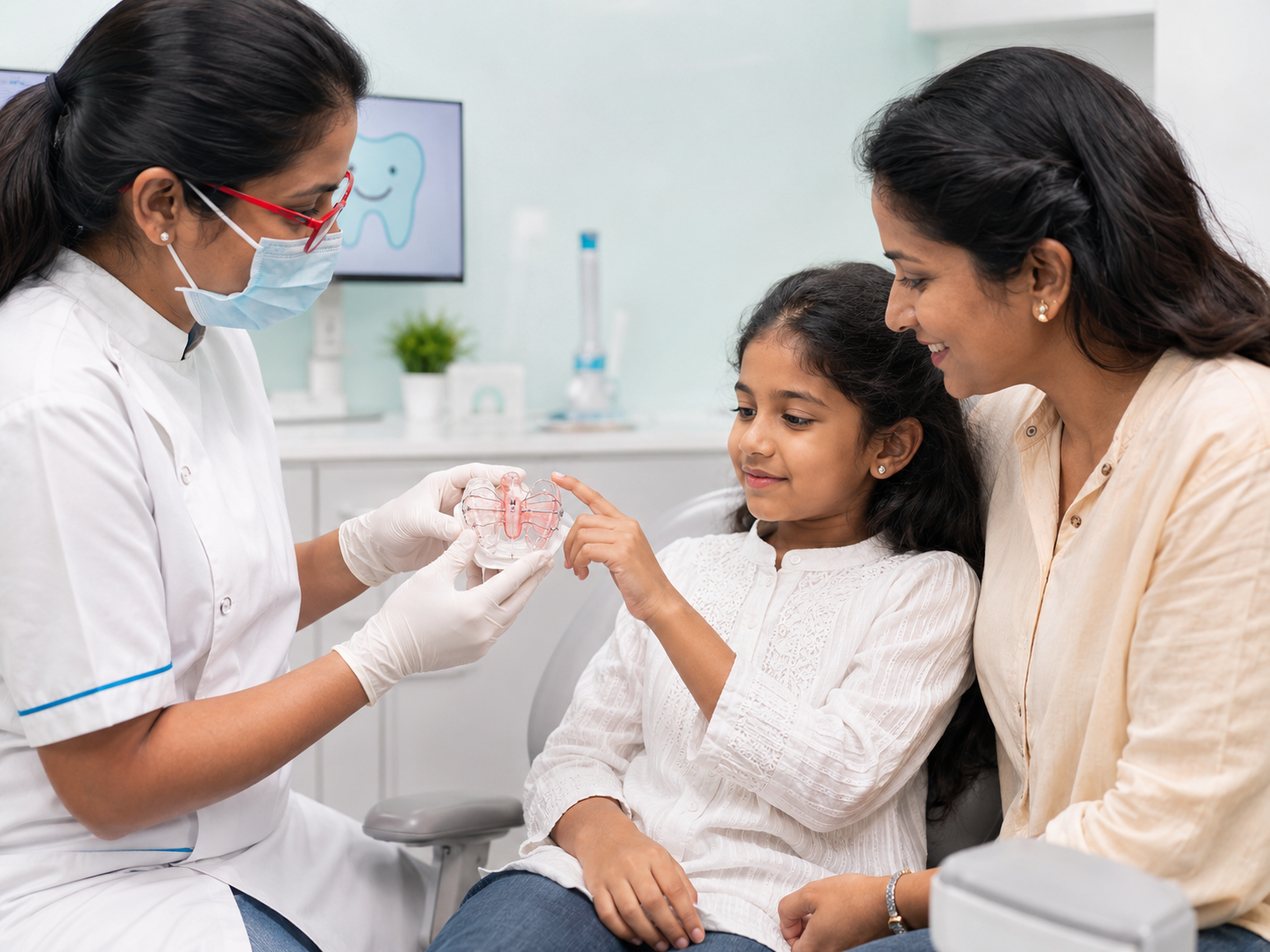
Why Parent Counselling Is Part of Every Visit
Children's dental health is determined almost entirely by decisions made at home — what they eat, how they brush, whether they use fluoride toothpaste, and how early professional care begins. A dental visit achieves limited results if parents leave without clear, practical guidance on the daily care that happens between appointments.
At Dr. Mittal's, parent counselling is not an optional add-on — it is structured into every preventive visit. Before a child leaves the clinic, the parent receives specific, age-appropriate guidance on exactly what to do at home.
What We Cover
- Brushing technique — the correct technique for the child's age, which toothbrush to use, and how long. For children under 7, parents should be brushing — not supervising. We demonstrate the technique chair-side.
- Fluoride toothpaste — the right amount for the child's age (smear for under-3s, pea-size from 3 upwards) and why spitting is not necessary for young children.
- Flossing — when to start (as soon as back teeth are in contact), how to do it without hurting, and the correct technique for young children.
- Diet guidance — frequency of sugar exposure, safe snack patterns, drink choices between meals.
- Habit management — thumb-sucking, dummy use, and mouth breathing, and when each warrants clinical attention.
- Dental milestones — when to expect tooth eruption, what normal teething looks like, when the first permanent molars appear (and why they matter).
Age-Specific Guidance
- 0–2 years — bottle feeding practices, when to start brushing, dummy management, first dental visit timing
- 2–5 years — establishing brushing routines, fluoride toothpaste, limiting juice, first X-rays
- 6–12 years — supervising brushing until at least age 7, permanent molar care, orthodontic screening, sports mouth guard
- 12+ years — teen-specific risks (orthodontic hygiene, sugary drinks, enamel erosion), transitioning to independent oral care
Frequently Asked Questions
Children should be supervised brushing — meaning a parent brushes after the child's attempt — until at least age 7 to 8. The ability to brush effectively requires fine motor skills that most children do not fully develop until this age. A useful benchmark: if a child cannot tie their own shoelaces, they cannot brush their own teeth adequately. Allowing children under 7 to brush unsupervised is one of the most common preventable causes of childhood cavities.
For children under 3: a smear — the size of a grain of rice. For children 3 and above: a pea-sized amount. Children do not need to rinse or spit after brushing — a small amount of residual fluoride toothpaste in the mouth actually extends protection. Toothpaste with 1000ppm fluoride is appropriate from the first tooth. There is no need for special children's toothpaste with lower fluoride, which is less effective at preventing cavities.