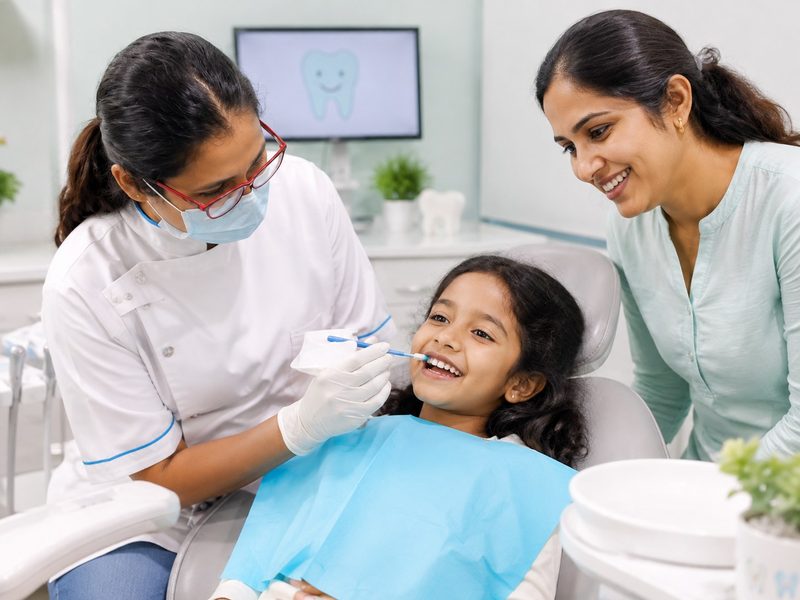
Prevention is not a supplement to dental treatment — it is the alternative to it. One well-timed preventive visit stops 90% of problems before they ever need intervention. It costs less, takes less time, and your child leaves healthy rather than treated.
What a Preventive Visit Includes
- Comprehensive examination — a full check of teeth, gums, bite, jaw development, and soft tissues. We look for early decay, eruption problems, and habits that need addressing before they become difficult to reverse.
- Professional oral cleaning (scaling) — gentle removal of plaque and calculus build-up that brushing cannot reach. Essential for children in the mixed dentition (baby + permanent teeth together).
- Fluoride varnish — a concentrated fluoride applied to the tooth surface in 2 minutes. Remineralises early lesions and makes enamel significantly more resistant to acid. Recommended every 6 months.
- Silver Diamine Fluoride (SDF) — a no-drill, no-injection option that arrests active cavities in baby teeth. Applied in one short visit. Ideal for young, anxious, or medically complex children.
- Pit and fissure sealants — a thin protective coating placed into the grooves of the back molar teeth, where 80% of childhood cavities begin. Takes 20 minutes. No injection needed. Lasts 5–7 years.
- Diet and brushing counselling — a personalised conversation with you about the specific foods, feeding patterns, and brushing techniques most likely to protect your child's teeth. We print a summary for home.
The Indian Academy of Pediatric Dentistry recommends the first dental visit by your child's first birthday. Early visits establish familiarity, catch decay before it spreads, and mean your child never needs to fear the dentist — because they have always known it as a positive place.
Age-Based Check-Up Guide
- 12 months — first visit. Gum check, early cavity detection, feeding counselling, and a positive introduction to the dental environment.
- 2–3 years — all 20 baby teeth present. First professional cleaning, fluoride application, and habit assessment (thumb sucking, dummy, mouth breathing).
- 5–6 years — first permanent molars begin erupting. Sealants are placed as soon as the molars are visible. Brushing technique for mixed dentition reviewed.
- 7–8 years — orthodontic screening. We check whether the jaws are developing normally and whether early intervention will simplify later treatment.
- 12–13 years — second permanent molars erupt. Second set of sealants placed. Periodontal health assessed as hormonal changes increase gum sensitivity.
Special Preventive Options
Silver Diamine Fluoride (SDF)
SDF is a clear liquid painted onto a cavity in under a minute. It arrests the decay process without any drilling or injection. The treated area turns black (this is the dead cavity, not the tooth), which parents should know about beforehand. SDF is an excellent choice for very young children, anxious children, or cavities in baby teeth that will fall out within 2 years.
Remineralisation Treatment
Not every white spot or early lesion needs a filling. We identify pre-cavity lesions — areas where enamel is weak but the cavity has not yet formed — and treat them with fluoride, casein phosphopeptide (CPP-ACP), and dietary modification. Many of these reverse completely without any intervention to the tooth structure.
Space Maintainers
When a baby tooth is lost early (through decay or trauma), the neighbouring teeth tend to drift into the gap, blocking the permanent tooth's eruption path. A space maintainer — a simple fixed wire appliance — holds the space open until the permanent tooth is ready to come through. Fitted in one visit, typically no injection needed.
Frequently Asked Questions
Related services: