Why Kids Resist Brushing (And What's Actually Going On)
Before jumping to solutions, it helps to understand the resistance. For young children, brushing involves someone putting an object in their mouth and controlling it which feels intrusive. The toothpaste may taste too strong, the brush may feel uncomfortable, and they have no understanding of why this matters.
This is not defiance. It's developmentally normal. The strategies below work because they shift brushing from something done to your child to something they participate in and eventually enjoy.
We're not just trying to clean teeth today. We're building a lifelong habit. A child who brushes cheerfully at 5 is far more likely to brush correctly at 15. That's the real prize.
The 10 Strategies
1. Let Them Choose Their Toothbrush
Take your child to the store and let them pick their own toothbrush their favourite colour, their favourite character, whatever excites them. Ownership changes everything. A toothbrush they chose is one they're far more likely to use. Replace it every 3 months and make the replacement a little event.
2. Use a Two-Minute Song or Timer
Two minutes feels endless to a child. Turn it into something finite and fun. Use a dedicated brushing song (YouTube has hundreds), a sand timer they get to flip, or a fun brushing app with animations. When the song ends, brushing ends simple, predictable, fair.
3. Try Flavoured Toothpaste
Standard mint toothpaste is designed for adults and is far too intense for most children. Strawberry, watermelon, bubblegum, and grape flavoured toothpastes are widely available and make a huge difference. Use a fluoride toothpaste just make sure the flavour is one your child actually likes. Let them try a few to find their favourite.
Under 3: a grain-of-rice sized smear. Ages 3–6: a pea-sized amount. Over 6: standard pea-sized. Always use fluoride toothpaste the flavour is fine to vary, but fluoride is non-negotiable for cavity prevention.
4. Make It a Game
Tell your child you're hunting for the "sugar bugs" that hide on teeth. Use a disclosing tablet (available at pharmacies) once a week it dyes plaque pink so children can actually see where they missed. Most kids find this fascinating and try harder to remove every pink spot.
5. Brush Together
Children learn by imitation. Brush your teeth at the same time, side by side. Let them watch you brush, spit, and rinse. Your routine becomes their routine. If you make it look fun and normal, they'll follow.
6. Give Them a Turn First
Let your child brush their own teeth first (even if they do a terrible job). After 30–60 seconds, say "Mummy's/Daddy's turn!" and finish properly. The sense of control matters enormously. Many children who refuse to have teeth brushed will happily hand over control after they've had their turn.
7. Use a Reward Chart
A simple sticker chart on the bathroom wall works wonders. One sticker per morning brush, one per night. After 10 stickers a small reward of their choosing (a book, an outing, extra screen time). Keep the rewards modest but consistent. The chart itself becomes motivating as they watch it fill up.
8. Read Stories About Brushing
Children's books normalise experiences before they happen. Some excellent ones: "The Tooth Book" by Dr. Seuss, "Brush Your Teeth, Please" by Leslie McGuire, and "Brush, Brush, Brush!" by Alicia Padron. Read these before bed and reference them during brushing time.
9. Never Force, Never Rush
Physically holding a child down to brush their teeth creates a trauma association that makes future brushing even harder. If your child is genuinely distressed, slow down, use a gentler brush, try a different flavour, give more control. A partially brushed mouth is better than a terrified child. Address the root cause with patience.
In our clinic, we use the Tell-Show-Do technique for every procedure explaining first, demonstrating, then doing. You can use the same approach at home: narrate what you're doing, show on your own teeth, then gently do theirs. Children feel much safer when they know what's coming.
10. Visit the Dentist Positively and Early
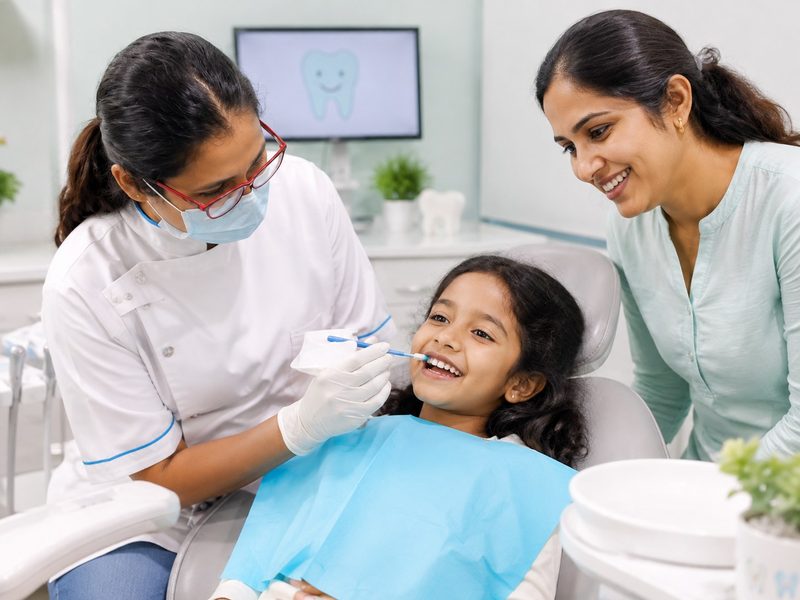
Regular dental visits reinforce that healthy teeth matter and that the dentist is a friendly, helpful person, not a scary one. When your child has a positive clinic experience, they connect brushing to positive outcomes rather than punishment or obligation.
If your child is over 2 and has never visited a dentist, book their first visit now. Early exposure is one of the most powerful tools for building positive dental habits.
When to Ask for Help
If brushing resistance is severe and persistent your child gags intensely, cries inconsolably, or has sensory sensitivities around their mouth please mention this at your next dental visit. Some children have sensory processing differences that require a specialised approach. We work with these children regularly and have specific techniques that help.
Call us at +91 99452 25971 or WhatsApp any time. We're always happy to give brushing tips specific to your child's age and situation no appointment needed for a quick question.