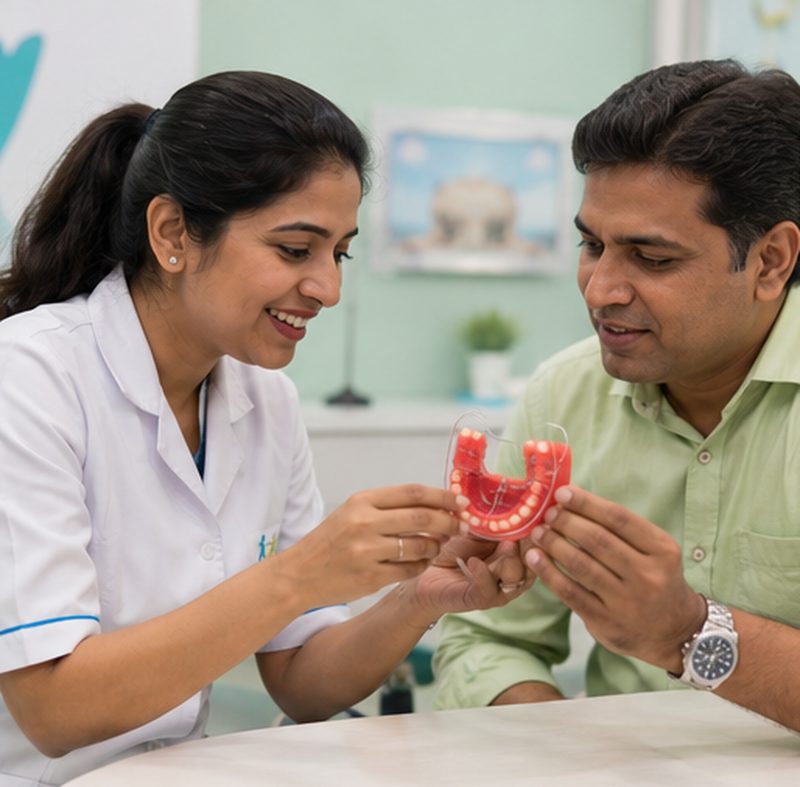
Why Age 7?
By age 7, most children have a mix of baby and permanent teeth enough for an orthodontist or pediatric dentist to identify developing problems. The jaw is still growing rapidly at this age, which means we can often guide development rather than correcting a fully formed problem later.
An age 7 assessment does not mean your child will get braces at age 7. It means we identify whether there is a problem, what the problem is, and whether early treatment would help or whether it's best to wait and watch.
Interceptive orthodontic treatment can reduce or eliminate the need for extractions, jaw surgery, or complex braces treatment in the teenage years. Not every child needs it but for those who do, starting early is significantly better.
The Age 7 Checklist: Signs to Watch For
Run through this checklist. If you notice several of these, it's worth booking an orthodontic assessment now regardless of your child's age:
You don't need to tick multiple boxes. Any single sign from the list above is a good reason to book an orthodontic assessment. The assessment itself takes about 30–40 minutes and gives you a clear picture of what, if anything, needs attention.
What Early Orthodontic Treatment Looks Like
If early intervention is recommended, it typically involves one of the following:
Space Maintainers
If a baby tooth is lost early, a space maintainer holds the gap open so the permanent tooth can erupt correctly. Simple, removable or fixed, and prevents much more complex treatment later.
Palatal Expanders
A device that gently widens the upper jaw over several months. Works best when the jaw suture is still open which it is until the early teens. Creating more arch space often eliminates the need for extractions later.
Partial Braces or Retainers
Sometimes just a few teeth need early guidance a partial brace on the front teeth can correct a developing problem while the rest of the mouth continues developing naturally.
For many children, the assessment at age 7 simply results in a "monitor and review" recommendation meaning no treatment now, but we watch carefully. This is completely valid. The point is to make an informed decision rather than missing a window of opportunity.
A Note for NRI Families
If you're visiting Bengaluru from abroad with a child aged 6–12 who has never had an orthodontic assessment, a comprehensive evaluation during your visit can give you a clear picture of the situation and a plan for the next 1–3 years whether treatment happens in India or abroad.
Call +91 99452 25971 or book online. Our assessments include X-rays, a thorough examination, and a written treatment recommendation you can take to any orthodontist worldwide.