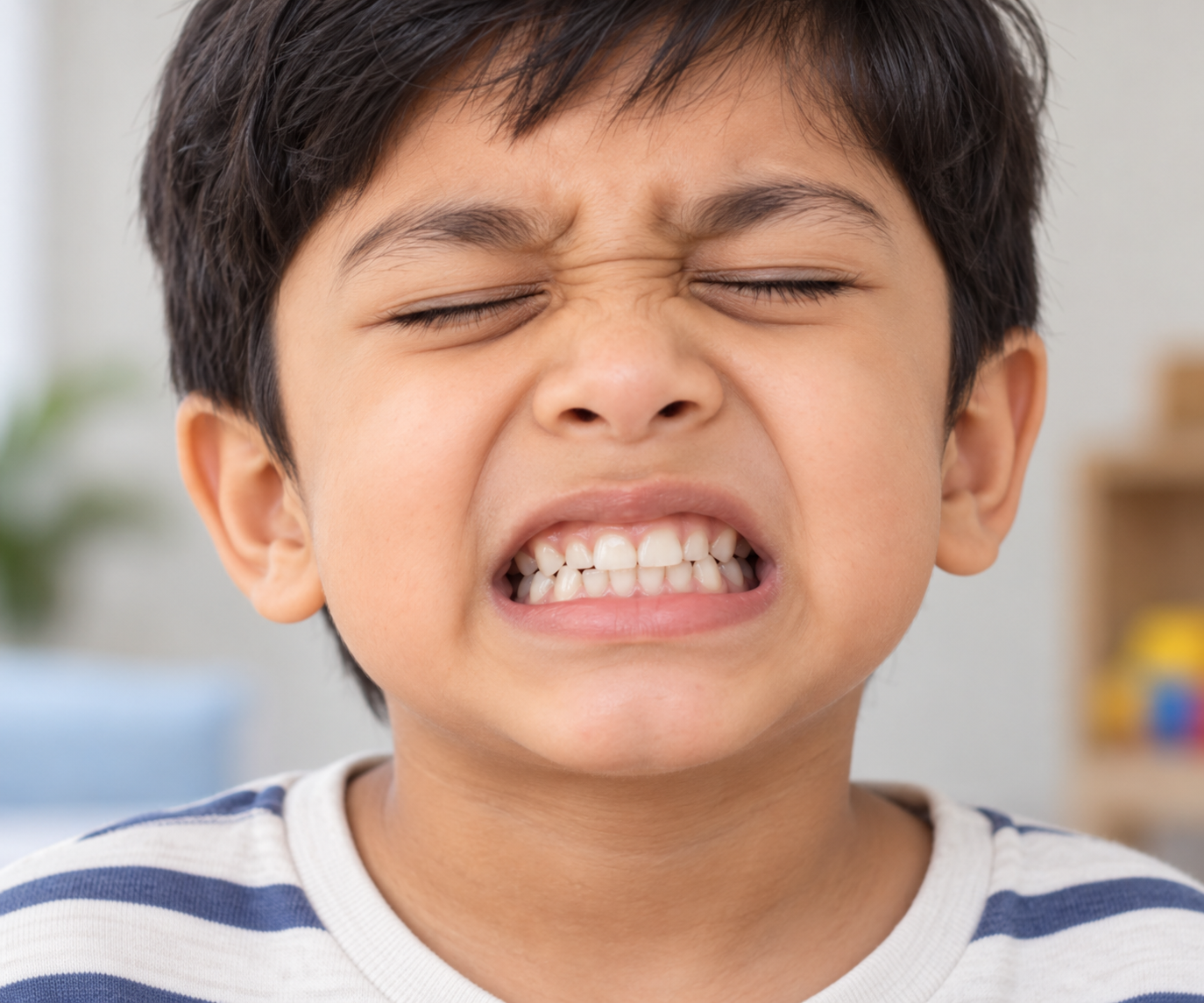
What is Bruxism?
Bruxism is the involuntary grinding or clenching of teeth. In children, it most commonly occurs during sleep (sleep bruxism) and is surprisingly prevalent — far more so than most parents realise. Awake bruxism, where a child clenches or grinds consciously during the day, also exists but is less common and more easily noticed.
The good news: most young children who grind their teeth during the primary (baby) tooth years grow out of it as their permanent teeth come in. The cases that need intervention are those where the grinding is causing significant tooth wear, jaw pain, or disturbed sleep.
Causes of Bruxism
- Tooth eruption — the most common cause in toddlers. As new teeth push through, the child grinds to relieve gum discomfort. This usually resolves on its own.
- Malocclusion (bad bite) — when the upper and lower teeth do not fit together comfortably, the jaw muscles look for a position of rest by grinding.
- Airway obstruction — enlarged adenoids, tonsils, or narrow jaws that cause sleep-disordered breathing are strongly linked to bruxism. The grinding may actually be a protective reflex to keep the airway open during sleep.
- Stress and anxiety — academic pressure, school transitions, and emotional stress are common triggers in school-age children, just as in adults.
- Neurological factors — children with cerebral palsy, ADHD, or autism spectrum disorders have a significantly higher prevalence of bruxism.
Signs and Effects
- Flat or worn cusps — the pointed tips of the back teeth become flat. In severe cases, the enamel is ground down to the softer dentine underneath.
- Tooth sensitivity — worn enamel exposes the inner layer, causing sharp sensitivity to cold and sweet foods.
- Jaw pain or stiffness — particularly in the morning, as the jaw muscles have been working all night.
- Headaches — the temporalis muscle (which closes the jaw) refers pain to the temples, causing tension headaches on waking.
- Earache without infection — the TMJ (jaw joint) sits directly in front of the ear canal; grinding overloads it, producing earache that is frequently misattributed to ear infections.
- Audible grinding at night — the grinding sound is often loud enough to wake other family members and is the most common reason parents bring it to our attention.
- Cracks or fractures — heavily worn teeth or teeth with existing restorations are at higher risk of cracking under bruxism forces.
Treatment
Monitoring
For most children, watchful waiting is the first step. We take study models (plaster casts of the teeth) at each visit and compare them over time to quantify whether the wear is progressing. Many children, especially those still in the primary dentition, improve without active intervention.
Addressing the Underlying Cause
This is the most important part of treatment. If the child snores, mouths breathes, or is restless at night, we investigate and manage the airway. If malocclusion is contributing, early orthodontic treatment may relieve the bite discrepancy. If stress is the driver, we work with parents on strategies and, where appropriate, refer to a child psychologist.
Night Guards
For older children with significant, progressing tooth wear, a custom-made hard acrylic occlusal splint worn at night distributes the grinding forces evenly, protecting the teeth. Night guards are not used in younger children whose jaws are still growing rapidly, as fixed appliances can restrict development.
Sports Guards
If the child plays contact sports and is also a grinder, a custom sports guard during play protects against both sporting impact and grinding-related fracture risk.
Research increasingly shows that many children who grind their teeth are doing so because their brain is signalling the jaw to move during sleep to prevent airway collapse. If your child grinds, snores, or seems tired despite adequate sleep hours, an airway assessment is essential — treating the airway often resolves the grinding completely.
Frequently Asked Questions
Related concerns: