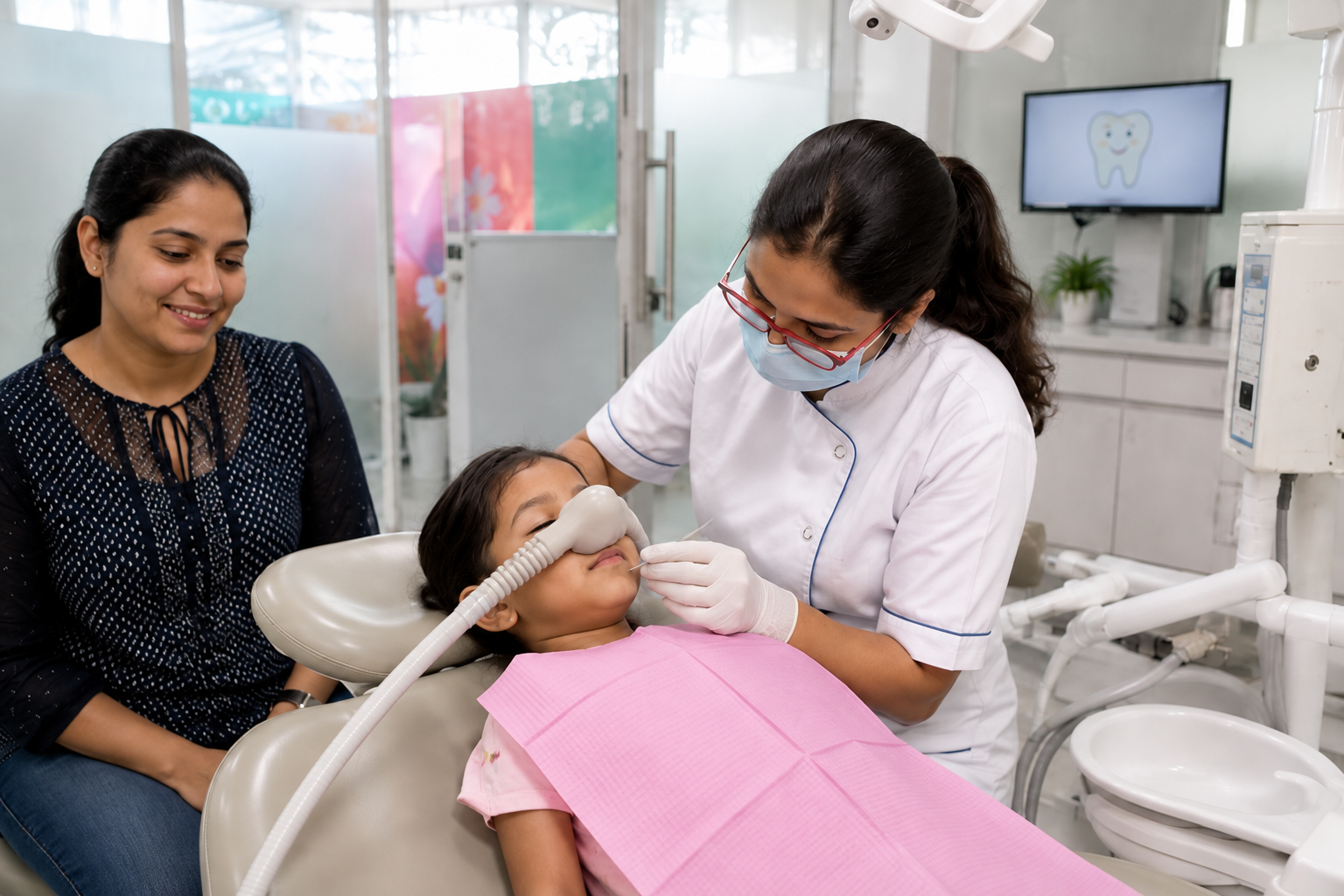
Sedation is not a first resort. We always try behavioural management first — and most children respond. But for those who cannot cooperate, sedation is not a compromise. It is the kindest and most effective path to complete, comfortable dental care.
When is Sedation Recommended?
- Severe dental anxiety that does not respond to behaviour management techniques — where each visit reinforces the fear rather than reducing it.
- Very young age (under 3) with extensive early childhood caries requiring treatment across multiple teeth.
- Special needs — autism spectrum disorder, cerebral palsy, intellectual disability — where the sensory or cognitive demands of a dental appointment are genuinely overwhelming.
- Multiple teeth in one session — avoiding 4 separate traumatic visits by completing everything in one comfortable appointment.
- Strong gag reflex that prevents examination and treatment even with topical anaesthetic.
Option 1: Nitrous Oxide (Laughing Gas)
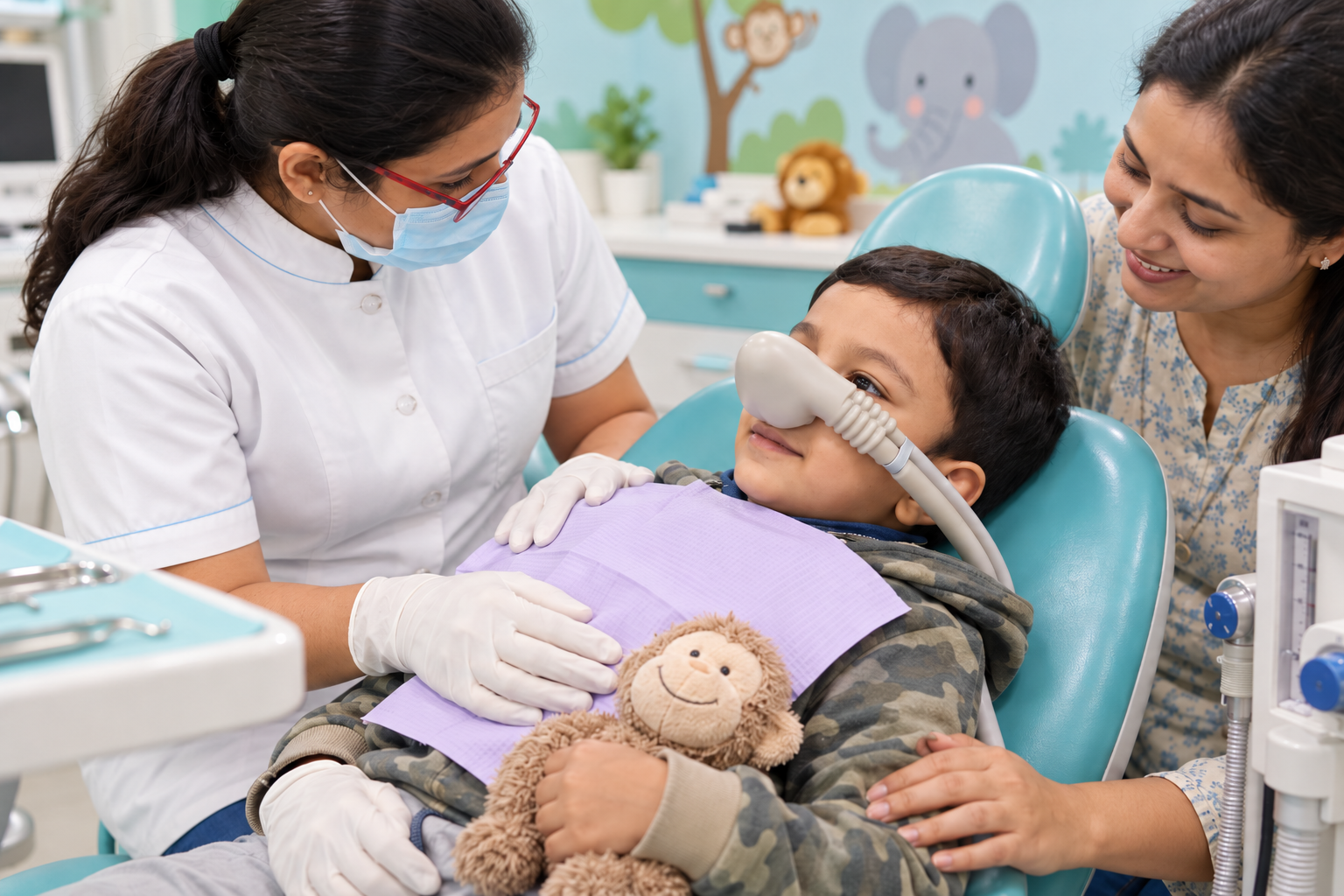
Nitrous oxide mixed with oxygen is delivered through a small, child-friendly nasal hood. The child stays fully awake and responsive — but feels relaxed, comfortable, and less aware of time passing. Many children describe feeling "floaty" or warm. Some giggle (hence the name).
Nitrous oxide takes effect within 3 to 5 minutes and wears off completely within 5 minutes of removing the mask. No drowsiness, no altered reflexes. Dr. Mittal is certified in conscious sedation administration.
- Suitable for — mild to moderate anxiety; children aged 3 and above who can breathe through their nose.
- Takes effect — 3 to 5 minutes after the mask is placed.
- Recovery — 5 minutes; child can return to school the same day.
- Child remains — fully conscious, able to respond to instructions throughout.
Option 2: Oral Sedation
A carefully calibrated dose of midazolam is given to the child approximately 30 to 45 minutes before the appointment. The child becomes drowsy and relaxed but remains conscious and protective reflexes are maintained. Vital signs are monitored throughout.
- Suitable for — moderate anxiety requiring deeper sedation than nitrous oxide alone.
- Fasting required — written guidelines provided in advance (no solid food for 6 hours, no fluids for 2 hours before).
- Recovery — 2 to 4 hours; a responsible adult must be present and the child cannot return to school.
- Memory — midazolam has an amnestic effect; most children remember little or nothing of the appointment.
Option 3: General Anaesthesia (GA)
Performed in a hospital theatre with a specialist paediatric anaesthesiologist, GA renders the child completely unconscious. Every confirmed procedure — fillings, extractions, pulpotomies, crowns — is completed in a single session. We work with NABH-accredited paediatric hospitals in Bengaluru.
- Suitable for — children under 3 with extensive decay; significant special needs; cases where sedation has been insufficient.
- One session, complete care — all necessary treatment is planned and executed in one visit, eliminating multiple traumatic appointments.
- Pre-operative assessment — blood work, medical history, and anaesthesiologist evaluation before the procedure.
- Recovery — 1 to 2 hours in supervised PACU; most children are discharged the same day.
- Parent present — you are with your child until they go under, and called immediately as they wake up.
Frequently Asked Questions
Related treatments: