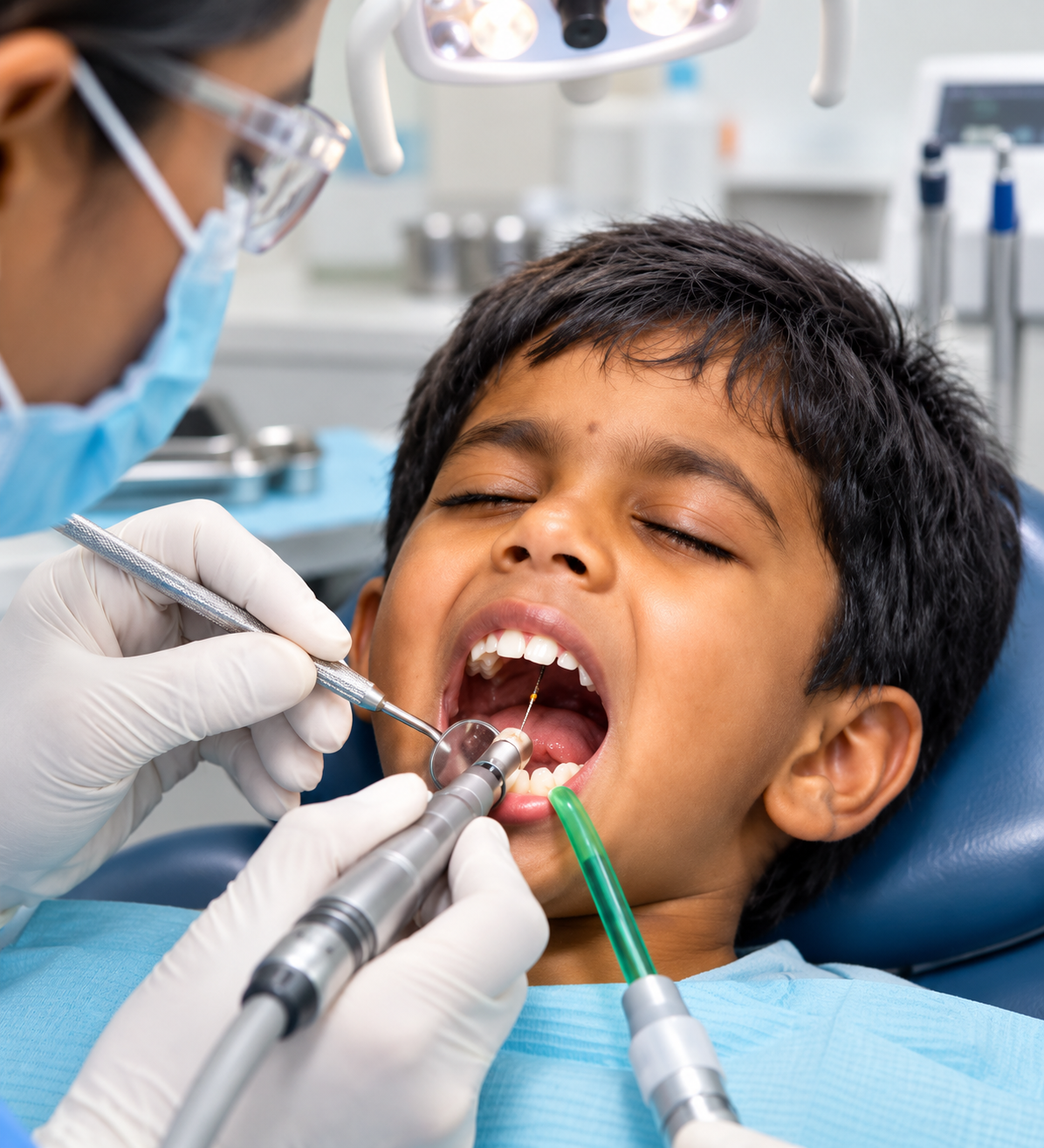
Why Saving Baby Teeth Is Critical
Many parents ask: "Why save a baby tooth — won't it fall out anyway?" The answer is that baby teeth serve essential functions far beyond chewing:
- Space holding — each baby tooth reserves the exact space the permanent tooth needs. Premature loss causes neighbouring teeth to drift, blocking the eruption path.
- Chewing and nutrition — a child who cannot chew on one side compensates with poor food choices and uneven jaw muscle development.
- Speech development — front baby teeth are essential for forming sounds such as "th", "f", "v" and "s". Early loss affects speech clarity.
- Jaw bone preservation — the roots of baby teeth stimulate the bone around them. Premature extraction leads to localised bone loss.
- Avoiding future crowding — space loss from early extractions is the single most common preventable cause of orthodontic crowding and the need for braces.
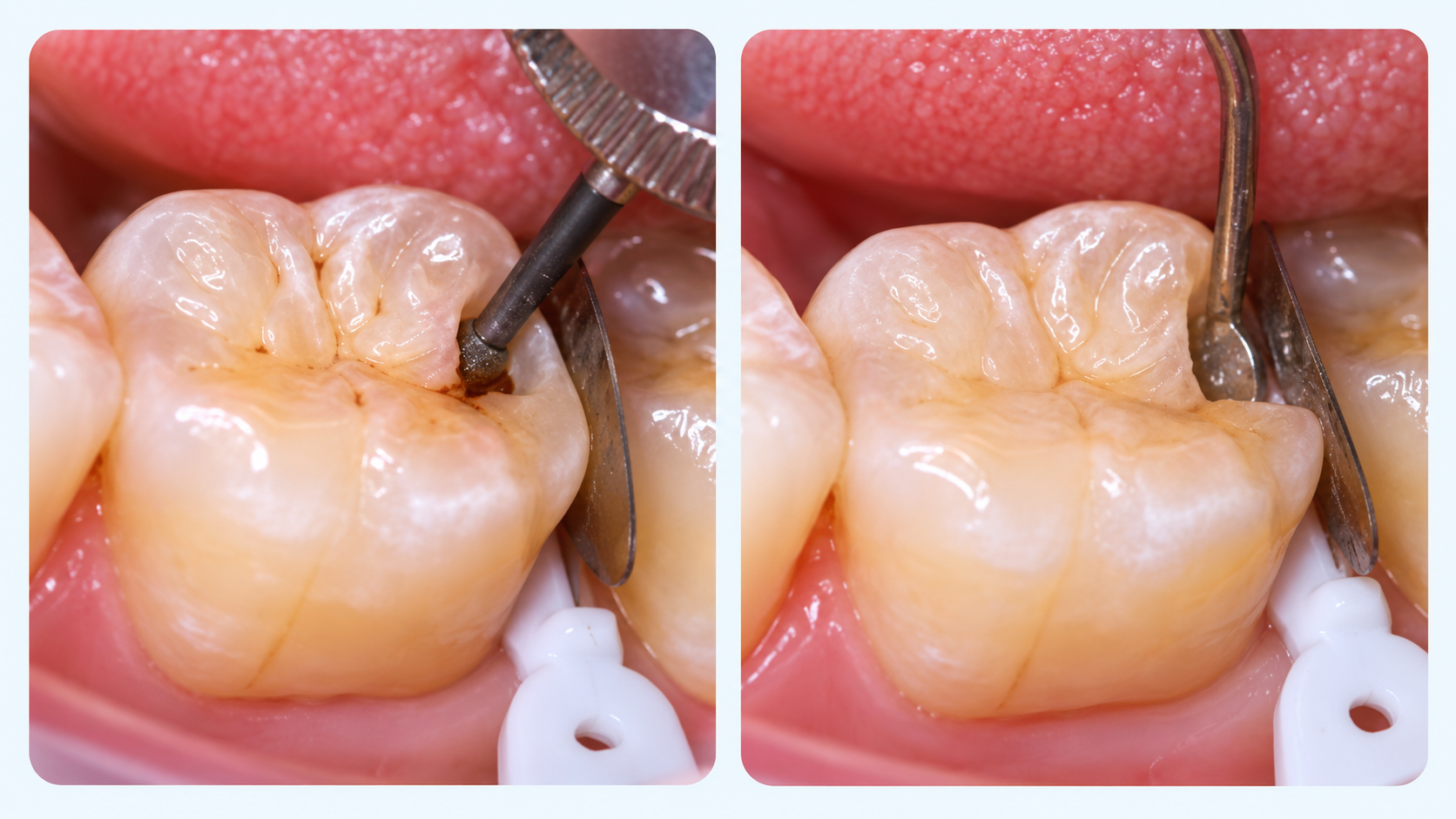
Pulpotomy vs Pulpectomy
The right procedure depends on how far the infection has progressed.
| Pulpotomy | Pulpectomy | |
|---|---|---|
| What's involved | Removal of infected pulp tissue from the crown (top) portion of the tooth only | Complete removal of pulp from crown and all root canals |
| When used | Infection limited to the pulp chamber; roots still healthy | Infection has spread into the root canals or beyond |
| Duration | 30–45 minutes | 45–60 minutes |
| Success rate | 85–95% | 80–90% |
| Always followed by | Crown (stainless steel or zirconia) | Crown (stainless steel or zirconia) |
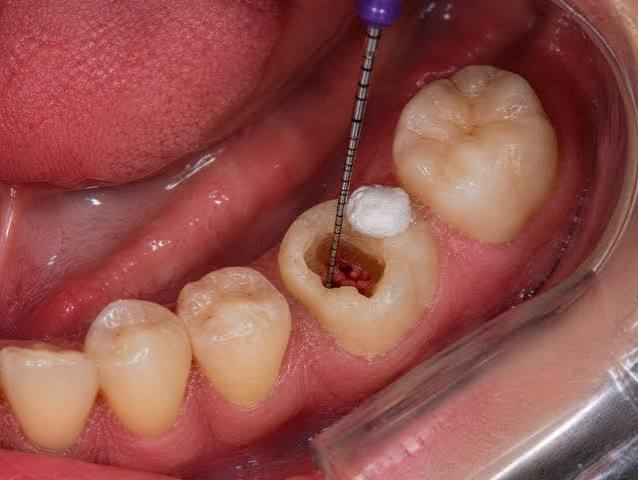
LASER-Assisted Root Canal
Dr. Mittal uses dental LASER technology to enhance the disinfection step of root canal treatment. The LASER light travels down the canal after mechanical cleaning and destroys bacteria in areas that instruments and irrigants cannot reliably reach — including the microscopic lateral canals and dentinal tubules. Benefits for children:
- More thorough elimination of bacteria, reducing the risk of re-infection.
- Faster post-operative healing of surrounding bone and gum tissue.
- Reduced need for antibiotics in many cases.
- The LASER procedure itself is completely painless under local anaesthetic.
Crown After Root Canal
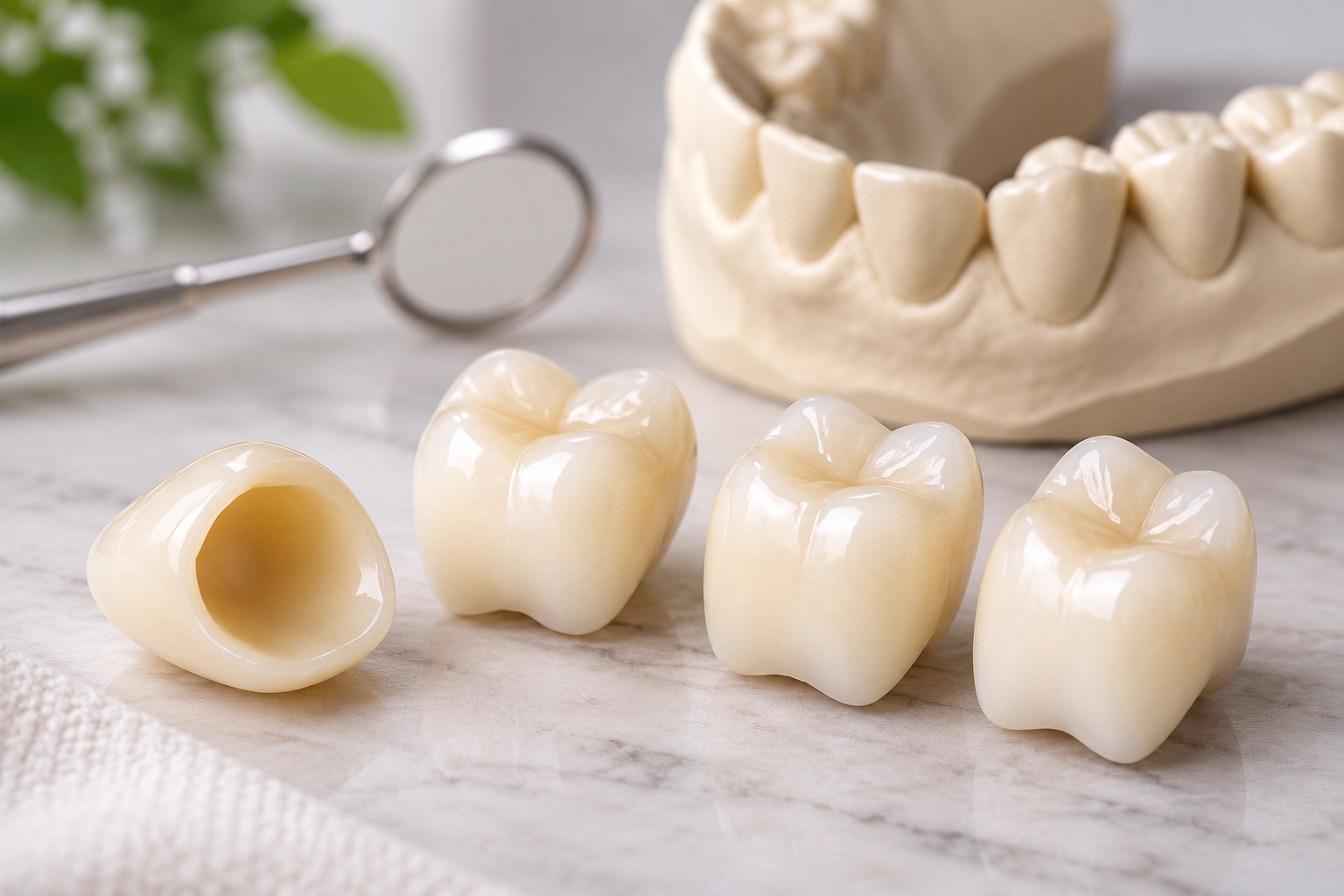
A crown is always placed after root canal treatment in baby teeth — this is not optional. After the pulp is removed, the tooth becomes brittle and is at high risk of fracture under normal biting forces. A crown protects the tooth and keeps it functional until the permanent tooth erupts naturally.
Metal (Stainless Steel) vs Zirconia Crowns
| Feature | Metal (Stainless Steel) | Zirconia |
|---|---|---|
| Appearance | Silver — visible on back teeth | Tooth-coloured — matches natural teeth |
| Durability | Extremely high | Very high |
| Placement | Single appointment | Single appointment |
| Best suited for | Back teeth (molars) | Front teeth or where aesthetics matter |
| Track record | Long | Very long |
| MRI compatibility | No | Yes |
| Cost | Lower | Higher |
PFM (Porcelain-Fused-to-Metal) vs Zirconia Crowns
| Feature | PFM (Porcelain-Fused-to-Metal) | Zirconia |
|---|---|---|
| Appearance | Tooth-coloured with metal margin at gum | Fully tooth-coloured — no metal margin |
| Chipping | Yes — porcelain layer can chip from metal | No — monolithic structure, no layering |
| Strength | High | Very high |
| Track record | Long | Very long |
| MRI compatibility | No | Yes |
| Gum response | Metal margin may cause gum darkening over time | Biocompatible — gum-friendly |
| Cost | Moderate | Higher |
For Permanent Teeth
When a young permanent tooth (immature, with an open root apex) becomes infected, the approach is different:
- Revascularisation / regeneration — for immature roots with open apices in children aged 7–14. The canal is disinfected and a blood clot allowed to form, encouraging the tooth's own stem cells to continue root development. The tooth remains vital and continues to develop normally.
- Conventional root canal treatment (RCT) — for fully developed permanent teeth. Standard adult-type root canal treatment with gutta-percha obturation, followed by a permanent restoration or crown.
Frequently Asked Questions
No. The procedure is performed under effective local anaesthetic — the tooth and surrounding area are completely numb before any treatment begins. Topical anaesthetic gel is applied first so the injection itself is barely felt. Many children are surprised at how comfortable the experience is. For very anxious children, nitrous oxide (laughing gas) can be added for additional relaxation throughout the procedure.
A successfully treated and crowned baby tooth typically remains in place until it is naturally shed — which could be anywhere from 2 to 8 years depending on the child's age at the time of treatment. The goal is always to keep the tooth until the permanent tooth is ready to erupt naturally beneath it. Success rates of 80–95% mean the vast majority of treated teeth serve their full purpose without further complications.