When Do Baby Teeth Come In?
Every baby is different, but there's a general timeline most children follow. The first tooth usually appears between 4 and 7 months, though some babies are born with a tooth already visible, and others don't cut their first tooth until 12–14 months. Both extremes are normal.
By age 3, most children have all 20 primary teeth. These baby teeth are not just placeholders they are critical for chewing, speech development, and holding the space for permanent teeth that will arrive years later.
Month-by-Month Teething Timeline
Months 4–7: Lower Central Incisors
The two bottom front teeth are almost always first. Your baby may drool more, chew on everything, and have swollen, tender gums. This is the beginning of teething.
Months 8–12: Upper Central & Lateral Incisors
The top four front teeth appear, followed by the upper lateral incisors. Your baby now has a recognisable smile and the drooling is usually at its peak.
Months 13–19: First Molars
These are larger and can cause more discomfort than the incisors. Many parents find this the hardest teething phase. First molars set up the chewing surface for solid food.
Months 16–23: Canines
The pointy canine teeth fill the gap between incisors and molars. These often erupt with less fanfare than molars.
Months 23–33: Second Molars
The final set of baby teeth complete the primary dentition. By age 3, your child should have all 20 teeth.
If no teeth have appeared by 15 months, book a dental visit. Delayed teething can occasionally indicate nutritional deficiencies or developmental issues that are best caught early. Early teething (before 3 months) is also worth a quick check.
Recognising Teething: Real vs. Myth
Parents often attribute many symptoms to teething, but research shows teething directly causes only a few. Here's what's real:
Genuinely caused by teething:
- Drooling (often excessive)
- Chewing on objects
- Swollen, red gums around the erupting tooth
- Mild irritability or fussiness
- Mild gum pain and disrupted sleep
NOT caused by teething (despite common belief):
- High fever (above 38.5°C)
- Diarrhoea or vomiting
- Rashes (beyond mild drool rash on the chin)
- Severe distress or inconsolable crying
If your child has fever above 38.5°C alongside teething symptoms, consult your paediatrician there is likely an unrelated infection that needs attention.
Soothing Teething Discomfort
There are several safe, evidence-backed ways to ease your baby's teething pain:
- Cold teething rings chilled (not frozen) silicone rings provide safe, effective relief. Never freeze them solid, as this can damage gums.
- Clean finger massage gently rubbing your clean finger on your baby's gum provides counter-pressure that many babies find soothing.
- Cold washcloth a clean, damp cloth chilled in the fridge (not freezer) works wonderfully.
- Paracetamol or ibuprofen (age-appropriate doses, if severe) always follow package dosing instructions and confirm with your paediatrician.
Do not use teething gels containing benzocaine (they can cause a dangerous condition called methemoglobinaemia in infants). Amber teething necklaces are a choking and strangulation hazard they offer no proven benefit. Homeopathic teething tablets have also been flagged for safety concerns by regulatory bodies.
Caring for Your Baby's First Tooth
The moment that first tooth appears, dental care begins. Here's how to do it right:
- Use a soft infant toothbrush look for one labelled "0–2 years" with extra-soft bristles and a small head.
- Fluoride toothpaste from day one a grain-of-rice smear (not a pea-sized amount) of fluoride toothpaste is recommended by both the Indian Society of Pedodontics and the AAPD from the moment the first tooth erupts.
- Brush twice daily morning and before bed. The bedtime brush is the most important one.
- Never put baby to sleep with a bottle milk or juice pooling around teeth overnight is the primary cause of early childhood tooth decay (baby bottle tooth decay).
- Clean your baby's gums before teeth arrive use a damp cloth after feeds to remove milk residue and bacteria.
Many parents worry about fluoride in toothpaste for infants. A rice-grain smear contains so little fluoride that swallowing it is safe. The decay-prevention benefit far outweighs the theoretical risk. Once your child can spit (usually around age 3), increase to a pea-sized amount.
The First Dental Visit
The recommendation from every major pediatric dental association is clear: first dental visit by 12 months, or within 6 months of the first tooth appearing whichever comes first.
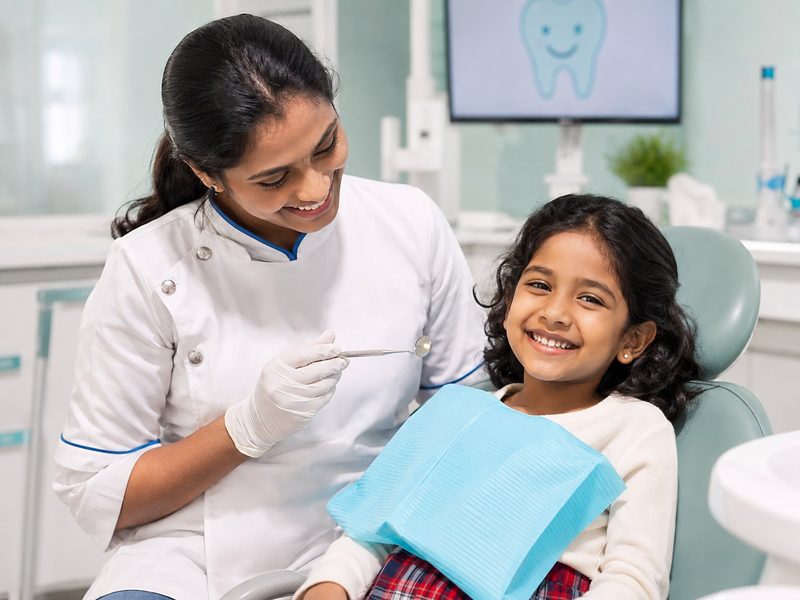
This first visit is brief, friendly, and focused on relationship-building rather than treatment. We assess gum health, eruption patterns, jaw development, and give parents personalised guidance on brushing technique, fluoride use, and feeding habits. Most importantly, your baby learns that the dentist is a safe, friendly place.
Children who have their first dental visit before age 1 are significantly less likely to develop dental anxiety, need emergency treatment, or require extensive procedures later in childhood.
Call us at +91 99452 25971 or book online. First dental visits are gentle, brief, and designed to make your baby smile. We'll guide you through everything you need to know for the next year of dental development.