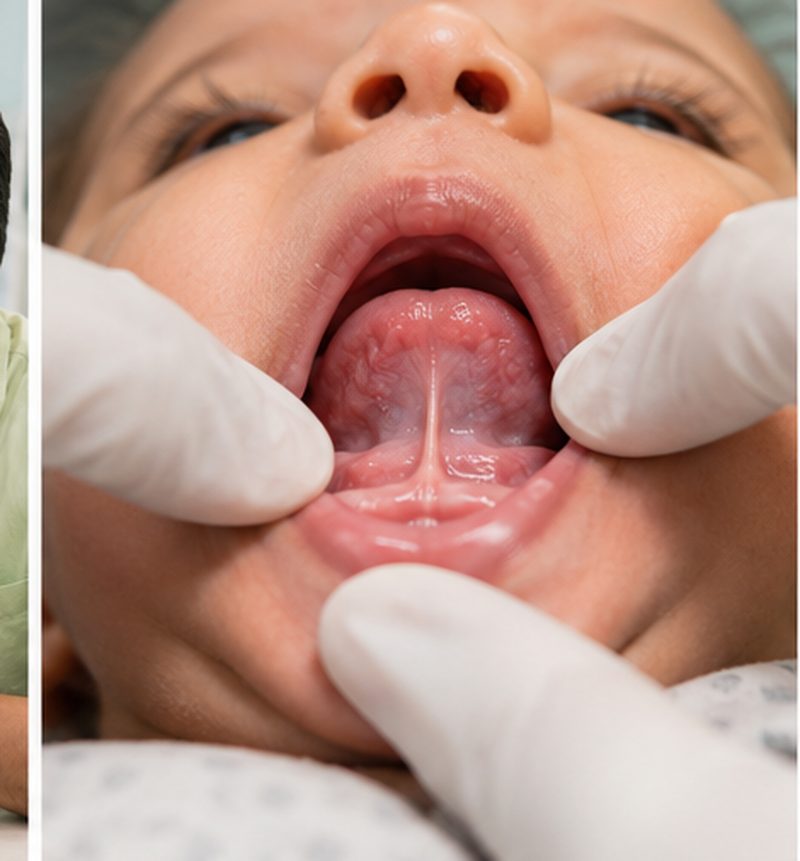
What Is Tongue Tie?
Tongue tie, medically known as ankyloglossia, is a condition where the lingual frenulum the small band of tissue connecting the underside of the tongue to the floor of the mouth is shorter, thicker, or tighter than normal. This restricts the tongue's range of motion and can interfere with a wide range of functions that depend on free tongue movement.
It is present from birth. In mild cases, it causes no noticeable problems and may resolve on its own. In moderate to severe cases, it requires treatment. The challenge is that its presentation varies enormously, and many healthcare providers have limited training in identifying it particularly the posterior (submucosal) form, which is not visible without a physical examination.
Studies report tongue tie in 4–10% of newborns, with some more recent research suggesting the true figure may be higher. It affects boys more frequently than girls at a ratio of approximately 2:1. Many cases particularly mild posterior ties go undiagnosed for years.
How Does Tongue Tie Affect Children By Age?
Newborns: Breastfeeding Difficulty
The most immediate and significant impact of tongue tie in newborns is difficulty breastfeeding. For effective latch, a baby needs to extend the tongue over the lower gum and create a seal. A restricted tongue cannot do this properly. Signs in a breastfeeding newborn include:
- Poor latch baby slips off the nipple repeatedly
- Clicking sounds while feeding (air leaking past the latch)
- Prolonged feeds with little milk transfer
- Infant weight loss or slow gain after day 5
- Maternal nipple pain, trauma, or mastitis
- Baby falling asleep at the breast before feeding adequately
- Excessive wind and reflux-like symptoms from swallowed air
Toddlers: Speech and Eating
As children develop language, restricted tongue movement becomes visible in articulation. Sounds that require tongue elevation particularly l, r, n, th, d, t, and s may be substituted, distorted, or omitted. Not every child with a tongue tie will have a speech problem, and not every speech problem is caused by tongue tie but the connection warrants assessment.
Eating difficulties in toddlers include problems moving food around the mouth efficiently, rejecting textured or chewy foods, pocketing food in the cheeks, and gagging on certain textures. These can contribute to nutritional restriction and feeding aversions.
Older Children: Jaw, Sleep, and Development
When the tongue rests in the floor of the mouth (rather than against the palate, as it should), it fails to apply the outward pressure needed for the upper jaw to widen naturally. This contributes to:
- Narrow upper jaw (high, vaulted palate)
- Crowded teeth and crossbite
- Altered facial development over time
- Mouth breathing and reduced nasal airflow
- Sleep-disordered breathing, snoring, and poor sleep quality
- Headaches and neck/postural tension (tongue posture affects cervical alignment)
The effects of tongue tie compound with age. A restriction that causes breastfeeding problems at 3 weeks may cause speech issues at 3 years and jaw narrowing and sleep problems at 7 years. Early identification and treatment typically prevents downstream complications and results in simpler treatment.
How Is Tongue Tie Diagnosed?
Diagnosis is clinical based on a physical examination by a trained provider. The Hazelbaker Assessment Tool for Lingual Frenulum Function (HATLFF) is a standardised scoring system used in newborns. In older children, a structured functional assessment is used: the clinician evaluates how far the child can elevate, lateralise, and protrude the tongue, and whether there is blanching, a V-shape, or tethering on elevation.
Anterior tongue ties are visible and obvious. Posterior tongue ties where the frenulum is submucosal (hidden under the mucosa at the back of the tongue) require palpation and a trained eye. They are frequently missed on routine newborn checks.
At Dr. Mittal's clinic, we assess tongue function holistically: tongue mobility, posture at rest, lip seal competence, palate width, dental eruption, speech patterns, and feeding history. A multidisciplinary picture gives the most accurate diagnosis.
What Is LASER Frenectomy and Why Is It Better?
A frenectomy is the release of the lingual frenulum. Traditionally performed with scissors or a scalpel under local anaesthesia, it is now most effectively performed using a dental LASER a soft-tissue diode or Er:YAG laser that precisely vaporises the restricting tissue.
Advantages of LASER over scissors or scalpel
- Minimal bleeding the laser simultaneously cuts and seals blood vessels
- No stitches required the wound edges seal naturally
- Faster healing reduced trauma means faster tissue recovery
- Less post-operative pain lower inflammation than scissor release
- Greater precision the LASER targets only the frenulum tissue with minimal effect on surrounding structures
- Sterile by nature the laser energy sterilises as it cuts
- Suitable from newborn age in infants, no anaesthesia is required; the procedure takes under 60 seconds
At our clinic, LASER frenectomy is performed using a calibrated soft-tissue laser with topical anaesthetic in infants and local anaesthetic in older children. The procedure itself takes 60–90 seconds. We also guide parents through a structured stretching and wound care protocol to prevent reattachment which is the most common reason for incomplete improvement.
What to expect: before, during, and after
Before: A full assessment to confirm diagnosis and ensure the child is a suitable candidate. For infants, a lactation consultant or speech therapist evaluation is recommended concurrently. For older children, myofunctional therapy exercises are begun 2–4 weeks before the procedure.
During: In infants (under 3 months), topical anaesthetic alone is typically sufficient the procedure is completed before they register discomfort. In older children, local anaesthetic is administered and the child is fully numb. The actual release takes under 2 minutes.
After: Most infants feed immediately post-procedure. Improvement in latch is often noticed within the first feeding. For older children, a 10–14 day wound care protocol (stretching exercises to prevent re-adhesion) is essential. Healing is typically complete within 2 weeks.
Myofunctional Therapy: The Essential Companion to Frenectomy
Releasing the frenulum removes the structural restriction but does not automatically retrain the muscles that have compensated for years. Myofunctional therapy (MFT) is a targeted exercise programme to retrain the tongue to rest against the palate, establish nasal breathing, correct swallowing patterns, and develop proper lip seal.
Research consistently shows that combining frenectomy with myofunctional therapy produces significantly better long-term outcomes than frenectomy alone particularly for speech, breathing, and dental development. At our clinic, we assess the need for MFT as part of every tongue tie evaluation.