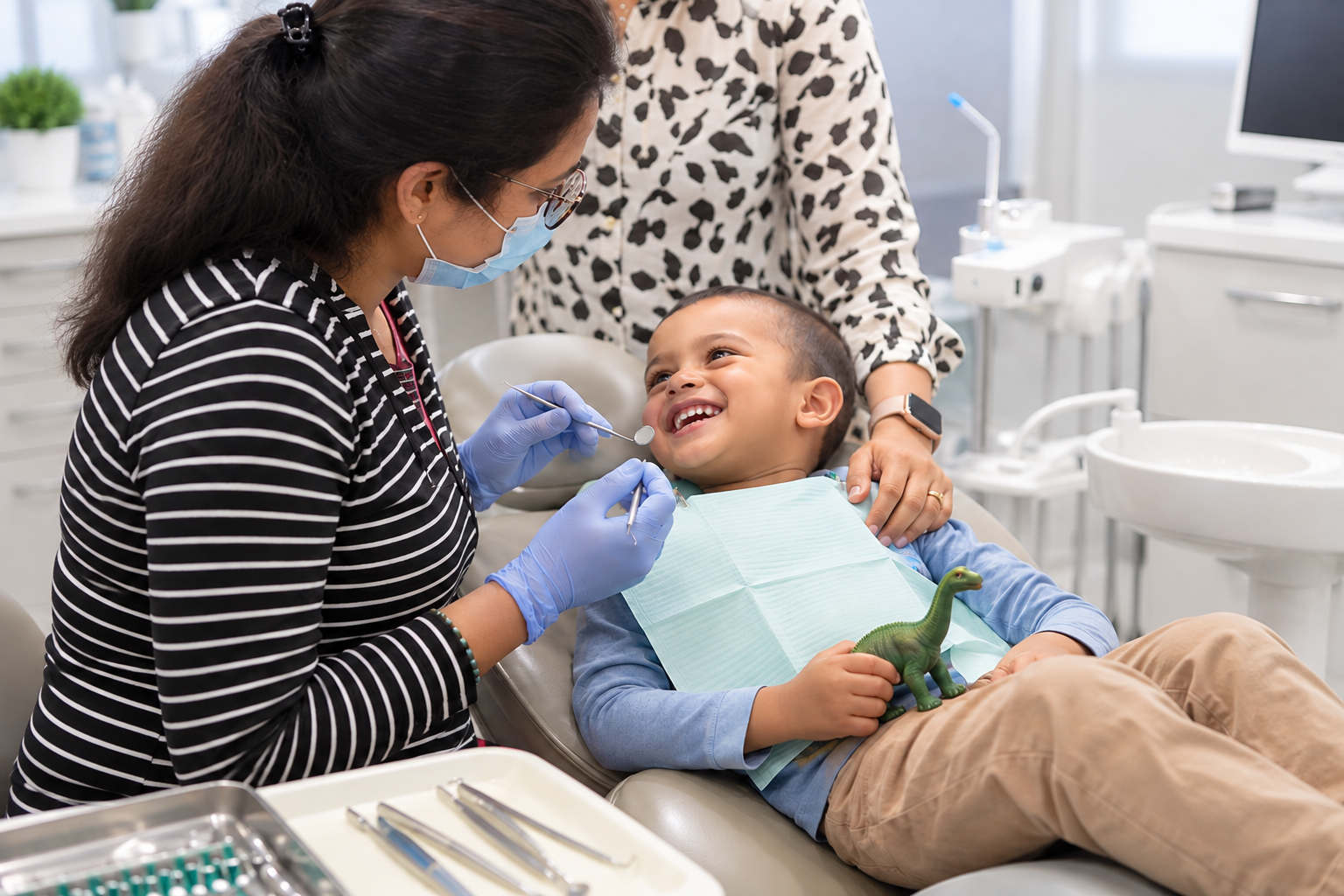
Not every dental clinic that treats children is a children's dental clinic. The distinction matters more than most parents realise — and it shapes every element of the experience, from the waiting room to the clinical protocols to the training of the dentist doing the treatment.
Designed for Children, Not Adapted for Them
A genuine children's dental clinic is designed from the ground up for a paediatric patient population. That means:
- Child-scale furniture — waiting area seating, activity tables, and visual distractors at child height, not an adult waiting room with a toy corner.
- Non-clinical colours and design — reducing the sensory association with medical settings that triggers anxiety in young children.
- Specific paediatric equipment — smaller mouth mirrors, paediatric-sized X-ray sensors, child-sized masks for nitrous oxide, and hand instruments scaled for primary teeth.
- Behaviour management infrastructure — a protocol for how anxiety is handled, not improvised per child. Tell-Show-Do, desensitisation visits, distraction tools, nitrous oxide as a standard option, not a last resort.
- Specialist qualification — an MDS in Paediatric Dentistry, not a BDS with paediatric experience.
Both our Banashankari and Chandra Layout branches are specialist paediatric dental facilities — not general clinics with a children's corner. Every element is designed for children from 0 to 18.
What We Treat at Dr. Mittal's Kids Dental
Preventive Care
Examination and cleaning, fluoride varnish, pit and fissure sealants, Silver Diamine Fluoride (SDF), digital radiographs, diet counselling, and parent education. Prevention is the most impactful treatment we do.
Restorative Care
Composite and GIC fillings, indirect pulp capping, pulpotomy (baby root canal), pulpectomy, zirconia and stainless steel crowns, minimally invasive dentistry. We treat decay thoroughly — not extracting baby teeth as the easy path out.
LASER Dentistry
Frenectomy for tongue tie and lip tie, LASER-assisted root canal, gingivectomy, operculectomy, and LANAP (gum regeneration). LASER procedures are faster, less painful, require no sutures, and heal faster — especially important for children.
Orthodontics
Early orthodontic screening from age 7, myofunctional appliances, space maintainers, habit-breaking appliances (for thumb sucking, tongue thrusting), RME, metal braces, ceramic braces, and clear aligners for teens.
Sedation
Nitrous oxide (conscious sedation), oral sedation (midazolam), and coordination with hospital anaesthesiology for GA cases. Sedation is a last resort after behaviour management — and done with full monitoring when needed.
Special Needs
Sensory-adapted appointments for ASD, modified protocols for CP and Down syndrome, pre-visit social stories, desensitisation visits, and full-mouth GA rehabilitation for children who cannot cooperate under conscious sedation.